Your EV Can Power Your Home During a Blackout. Here's How.
V2L (Vehicle-to-Load) lets BYD, Hyundai, and Kia EVs act as a portable generator during Nigeria's frequent outages. Find out which cars support it, what they can run, and how long the power lasts.
The Night NEPA Took Light and the Generator Died
It was a Wednesday evening in Lekki. The grid went down at 7pm, the way it always does. The backup generator sputtered to life, ran for two hours, and then stopped. Diesel finished. The house went dark. A BYD Atto 3 sat in the driveway with 80% battery and nobody knew it could have kept the lights on until morning.
What Is V2L and Why Nigeria Should Care
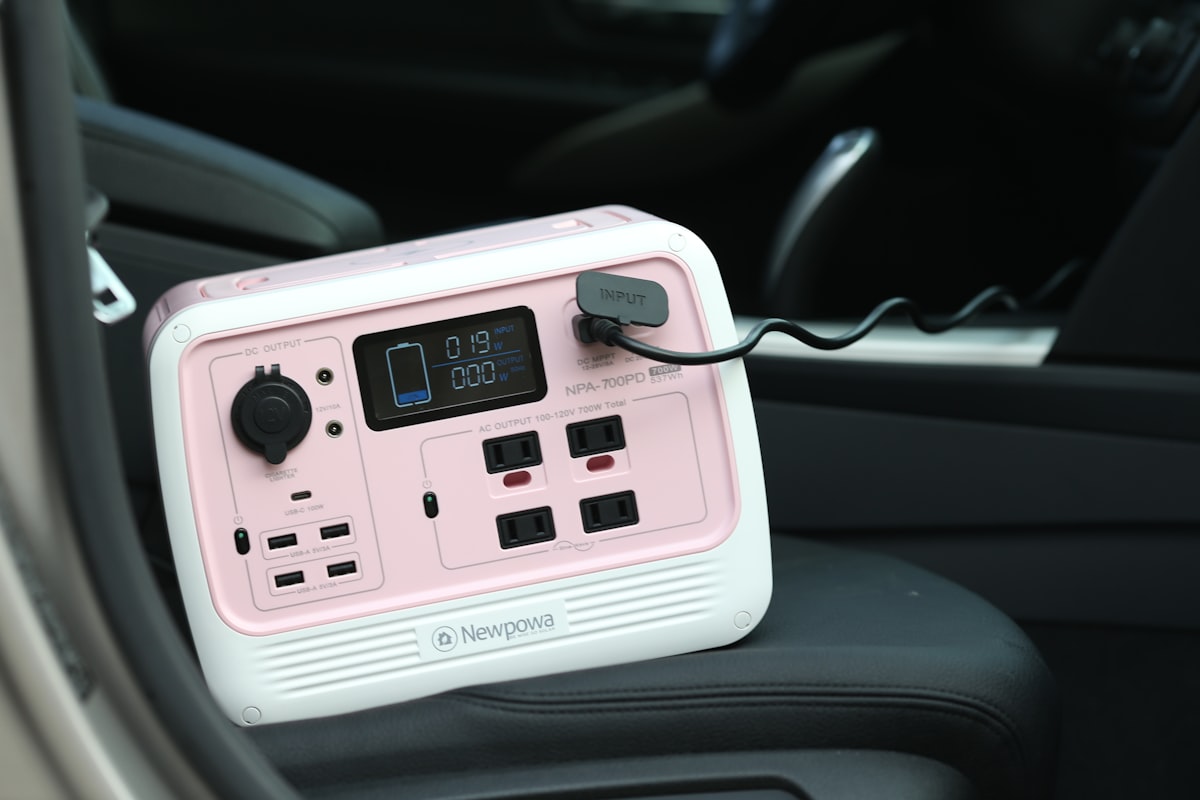
Vehicle-to-Load (V2L) is a feature that lets your EV supply AC power directly to appliances through its built-in inverter. Think of it as your car becoming a portable generator. You plug a small adapter into the car's charging port, plug your appliances into the adapter, and the car powers them. No generator. No diesel. No noise.
Clean Energy Reviews describes it well: V2L "essentially turns your car into a portable generator." One that runs silently, costs nothing per hour once charged, and can last for days on a single battery.
This is different from V2G (Vehicle-to-Grid), the more advanced version where an EV pushes power back into the national grid. V2G requires bidirectional chargers with grid synchronisation hardware. As of April 2026, V2G is not commercially available in Nigeria. V2L needs no special charger or grid connection. It works anywhere your car is parked.
Why This Matters More in Nigeria Than Almost Anywhere Else
Nigerian households in Lagos, Kano, and most other states receive as little as 1 to 4 hours of grid electricity per day on average. Research from the Energy for Growth Hub found that feeders in southwestern Nigerian cities experience an average of 640 outages per year, which works out to roughly 160 days of blackout annually.
Nigeria's national electricity grid collapsed nine times in 2024 alone. One of those collapses, on November 5, 2024, was a complete zero-megawatt system failure. Nationwide. Hours to days of darkness across Lagos, Abuja, and everywhere between.
Most households respond by running petrol or diesel generators. The running costs for a 5 kVA diesel generator sit at NGN 1,500 to over NGN 3,000 per hour at current diesel prices. Run the gen for 8 hours a day and you are spending NGN 12,000 to 24,000 daily on fuel alone. An EV with V2L changes that equation entirely.
Which EVs in Nigeria Support V2L
As of early 2026, these are the V2L-capable vehicles you can actually buy in Nigeria or import through normal channels:
BYD Models (via LOXEA/CFAO Mobility, Victoria Island, Lagos)
BYD officially launched in Nigeria on March 28, 2025, through LOXEA, a division of CFAO Mobility. The two models in dealerships now are the Atto 3 and the Dolphin. The Seal is expected to follow.
- BYD Atto 3: V2L output of approximately 2.2 kW continuous (10A), with a 3.2 kW peak. Real-world testing confirmed it ran an air fryer and kettle simultaneously from a standard twin-socket powerboard.
- BYD Dolphin: V2L output of approximately 2.2 kW via the same Type 2 adapter system.
- BYD Seal: V2L output up to 2.4 kW continuous via the same Type 2 charging port adapter.
BYD's V2L system requires a separate external adapter, not a built-in socket. You plug a Type 2 V2L adapter into the car's charging port and connect your appliances to the adapter. Third-party adapters cost approximately $50 to $120 USD depending on supplier. Whether the BYD Nigeria dealership stocks this accessory directly has not been confirmed as of this writing, so buyers may need to source it independently.
You also set a battery cutoff threshold in the car's infotainment settings, anywhere between 20% and 80% state of charge, so the car stops discharging before you lose driving range. The V2L function cuts off automatically when it hits that threshold.
Hyundai and Kia Models (available through import and local dealers)
Kia Nigeria is actively selling both the EV6 and EV9. The EV6 listing explicitly highlights V2L as a feature for powering devices.
- Hyundai Ioniq 5: 3.6 kW (15A at 230V / 50Hz). Nigeria uses the 230-240V / 50Hz standard, which means Nigerian owners get the full 3.6 kW output, matching European markets. Not the reduced 1.9 kW available in North America.
- Hyundai Ioniq 6: Same specification as the Ioniq 5: 3.6 kW at 230V / 50Hz, delivered via a CCS port adapter.
- Kia EV6: 3.6 kW (3,600W) via external port adapter. Specifications confirmed in the official Kia owner's manual.
- Kia EV9: Up to 3.68 kW via V2L ports.
What V2L Can and Cannot Power
Between 2.2 kW and 3.6 kW covers most essential home loads during a blackout. Here is what fits comfortably:
- Refrigerator: 100 to 200W
- LED television: 50 to 150W
- Ceiling fans (up to 4): 60 to 75W each
- Phone and laptop chargers: 30 to 100W each
- WiFi router: 10 to 20W
- LED lights: 5 to 15W each
Running all of the above together puts you at roughly 500 to 700W total, well within what any V2L-capable EV can supply.
What it cannot power is the air conditioner. A single 1.5HP (1,119W) AC unit, combined with a fridge and a few fans, pushes past even the Ioniq 5's 3.6 kW ceiling. Electric irons (1,000 to 2,000W) and water heaters (2,000 to 4,000W) are also off the table. V2L is your NEPA backup, not a whole-house solution. Keep the gen for heavy appliances if you need them.
How Long Will the Power Last
A 60 kWh battery (BYD Seal Standard Range, for example) powering a moderate 500W load (fridge, a fan, lights, phones) carries approximately 96 hours of capacity before reaching zero. BYD's system cuts out at 20% battery reserve, leaving you with roughly 77 usable hours. That is more than three days of continuous backup on essentials.
A 77 kWh Ioniq 5 running a 1,000W load (fridge, TV, two fans, lights) would last approximately 60 hours. At a more typical 500W average, you are looking at over 5 days of backup before needing to recharge. No typical NEPA outage in Lagos lasts 5 days.
Compare that to a diesel generator: running 8 hours a day costs NGN 12,000 to 24,000 in fuel. Your EV costs nothing per hour once it is charged, and it charged overnight using grid electricity at a fraction of that rate.
The Bigger Picture: V2G and Nigeria's Grid
True Vehicle-to-Grid (V2G) is where your car exports power back into the national grid. It is not available in Nigeria yet. South Africa has the continent's first commercial V2G pilot, built by Zimi using 120 kW DC bidirectional charging stations with logistics fleets. The goal there is to reduce load shedding. Nigeria has no equivalent infrastructure as of April 2026.
The research case for eventually building it is strong. A peer-reviewed study published in PMC found that charging Nigerian EVs with variable renewable energy on a V2G strategy could reduce excess renewable energy curtailment by 76% and cut CO2 emissions by 72%. Even 10% EV penetration using V2G captures most of the grid stabilisation benefits.
The global V2G market was valued at USD 5.75 billion in 2025 and is forecast to reach USD 19.5 billion by 2030, a CAGR of 27.66%. When bidirectional charging infrastructure eventually arrives in Nigeria, the EVs parked in driveways across Victoria Island and Wuse 2 will become part of the national energy solution. That is years away. V2L is available now, today, for the cars already on Nigerian roads.
What These Cost on ChargeWay
You do not have to navigate the import process alone. ChargeWay sources quality tested used EVs direct from China at wholesale pricing. Every vehicle is properly inspected before it ships. Here is what you could pay right now:
| Model | FOB Price | Est. Landed Price | Range |
|---|---|---|---|
| BYD Seagull | $10,000 | ~N18,500,000 | 305 km |
| Neta V | $12,000 | ~N22,000,000 | 380 km |
| BYD Dolphin | $16,000 | ~N28,000,000 | 427 km |
These are estimated wholesale prices for quality tested vehicles, shipped direct from China. No middleman markup, no dealer premium. Final prices depend on current exchange rates at time of order. Visit chargeway.africa/cars for live pricing and available stock.
Related Articles
Can You Charge an EV with a Generator in Nigeria?
NEPA goes off at 11pm, your EV is at 18%, and your generator is already running. Here is exactly what you need to know before you plug in.
6 min read
ChargingHow to Charge Your EV at Home in Nigeria
Most Nigerian EV owners never see the inside of a public charging station. They plug in at home every night. Here is exactly how to do it safely, what it costs, and what to do when NEPA is not cooperating.
8 min read
ChargingWhere to Charge Your EV in Lagos (2025 Complete Guide)
Lagos has between 8 and 12 commercial EV charging stations, almost all run by one company. Home charging is how most owners survive. Here is exactly where to plug in, what it costs, and how to set yourself up.
7 min read