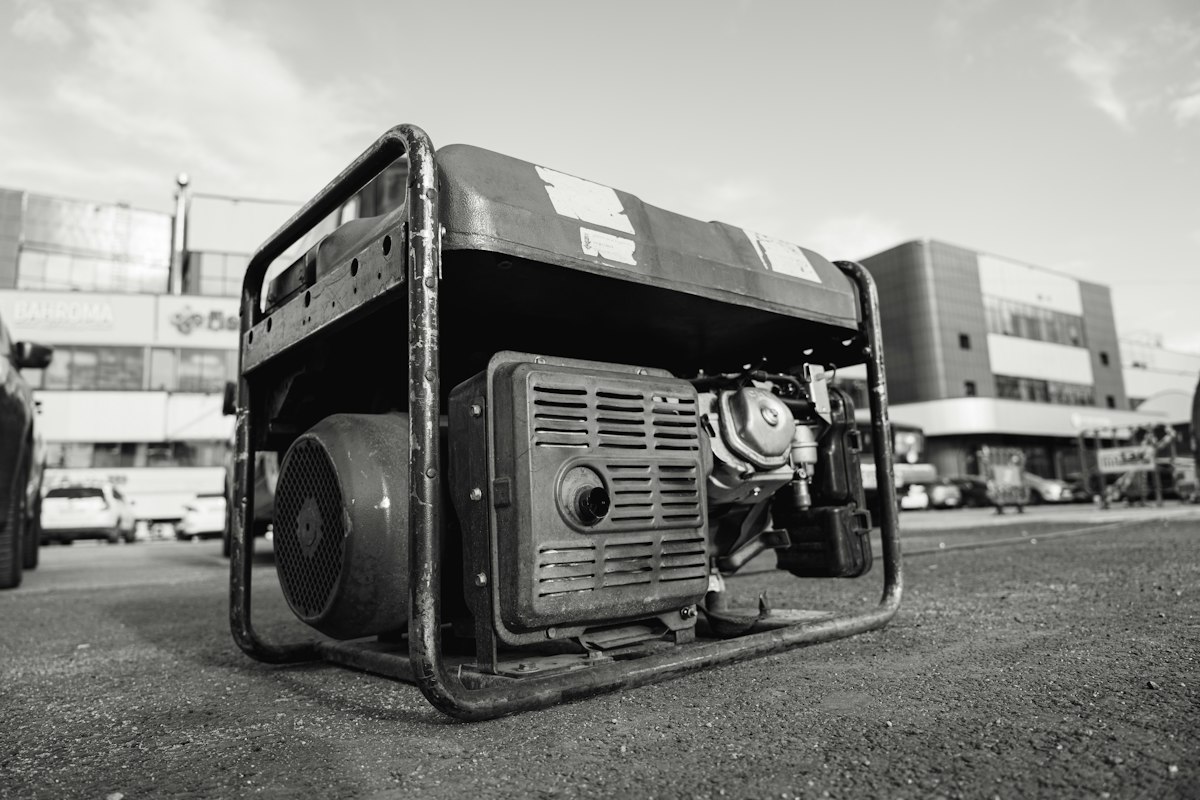
Can You Charge an EV with a Generator in Nigeria?
NEPA goes off at 11pm, your EV is at 18%, and your generator is already running. Here is exactly what you need to know before you plug in.
It is 11pm in Lekki. The inverter beeped out two hours ago, NEPA has not restored power since morning, and your BYD Atto 3 is sitting at 18%. You have an early meeting in VI and 68 km to cover. Your Firman generator is humming outside. The question is simple: can you just plug the car in?
The answer is yes, but only with the right generator and the right setup. Plug into the wrong generator and your onboard charger rejects the power outright. Plug in with no grounding and your EVSE trips. Run the generator in the wrong spot and carbon monoxide does the rest. This guide covers every step, every number, and every precaution so you do not learn any of these lessons the hard way.
Why This Question Matters More in Nigeria Than Almost Anywhere Else
Nigeria's national grid has collapsed more than 200 times in the past nine years. On a good day, a connected household gets 8 to 14 hours of supply. There were six documented full grid collapses in 2023 alone. Only 45% of the population is even connected to the grid. Nigerians collectively spend over $20 billion every year on diesel and petrol generators just to keep the lights on.
For EV owners, this is not a theoretical problem. Charging from a standard 240V Nigerian home socket delivers 1 to 2 kWh per hour. A 40 kWh battery needs 16 or more hours to charge fully. If NEPA only shows up for 8 hours, you may never complete a full charge without a backup plan. Generator charging is not exotic in this context. It is a practical necessity.
The One Thing That Makes or Breaks Generator Charging
Not every generator works. This is the most important thing to understand.
Your EV's onboard charger is sensitive to power quality. It measures Total Harmonic Distortion, or THD, in the electricity it receives. The maximum THD most EV onboard chargers will accept is 6%. Conventional petrol generators, the kind sold in markets all over Lagos and Abuja, produce dirty power with THD between 8% and 25%. That power gets rejected. In the best case, the car simply refuses to charge and throws a fault code. In a worse case, it damages the onboard charger over time.
You need an inverter generator. These produce pure sine wave electricity with THD of 1 to 3%, well within what your EV will accept. The packaging will say "inverter generator" or "pure sine wave." Common brands available in Nigeria include Yamaha, Elemax, Firman, and Elepaq inverter models. Prices for quality 3 kVA to 5 kVA inverter units run from N450,000 to N1,200,000 depending on brand and capacity.
If you already own a conventional generator, it will not reliably charge your EV. There is no workaround for this.
What Size Generator Do You Actually Need?
The generator's continuous output must exceed the EV's onboard charger draw by at least 10 to 20%, to handle startup surges and avoid running the engine at 100% load continuously, which shortens its life.
Here is what this looks like for the most common EVs in Nigeria:
| EV Model | Onboard AC Charger | Min Generator for Full Speed | Min Generator for Emergency Slow Charge |
|---|---|---|---|
| BYD Atto 3 | 7 kW single-phase | 8,000W continuous (inverter) | 3,000W |
| BYD Seagull | 6.6 kW single-phase | 7,500W continuous (inverter) | 2,500W |
| BYD Seal | 7 kW single-phase | 8,000W continuous (inverter) | 3,000W |
| Tesla Model 3 / Model Y | 7.2 kW single-phase / 11 kW three-phase | 8,000-12,000W continuous (inverter) | 1,800W minimum for trickle |
| Hyundai Kona Electric | 7.2 kW | 8,000W continuous (inverter) | 3,000W |
| Hyundai IONIQ 5 | 10.5 kW | 12,000W continuous (inverter) | 3,000W |
| Nissan Leaf (40 kWh) | 6.6 kW (3.3 kW on older models) | 7,500W continuous (inverter) | 2,000W for slow charge on 3.3 kW models |
For most people, a 3,000W inverter generator handles emergency overnight charging at a slow rate, adding roughly 6 to 48 km of range per hour depending on your car and generator size. That is enough to top up before morning in most situations. If you want to charge at meaningful speed, you are looking at 7,500W or more.
Safety: The Rules You Cannot Skip
Generator charging has killed people. Not from electricity, but from carbon monoxide. Here is what you must do.
1. Run the generator outdoors, at least 5 to 6 metres from any opening
Carbon monoxide is colourless and odourless and it can kill within minutes. A garage with the door open is not sufficient. The gate area of a compound where exhaust can drift back through a window is not sufficient. The generator goes outside, far from doors, windows, and vents. This is not negotiable.
2. Only use an inverter generator
Already covered above, but it bears repeating. Conventional generator, wrong power quality, your EV's charger rejects it or gets damaged.
3. Fix the floating neutral
Many portable generators have a "floating neutral" design. Your EVSE checks that the neutral and ground are properly bonded. If they are not, it refuses to charge. The fix is a neutral-to-ground bonding plug, which any electrician can make for a few thousand naira. Also connect the generator's grounding terminal to a grounding rod in the earth.
4. Use a GFCI-protected outlet or extension cord
A GFCI device detects current imbalances and cuts power in milliseconds, preventing electrocution. This matters everywhere, but especially during Lagos or Port Harcourt wet season (April to October) when charging cables are sitting on wet ground.
5. Use the right extension cord
An undersized extension cord will drop voltage, overheat, and cause EVSE faults. For 7 kW charging, use a 2.5mm2 or thicker cable rated at 32A or more. If the cord gets warm to the touch during charging, it is too small.
6. Keep the connections dry
Shield both the EVSE inlet plug and the generator outlet from rain. A simple canopy or cover over both connection points is enough. Wet season charging without this is a real risk.
7. Do not refuel while running
Let the generator cool for at least two minutes before adding fuel. Never store fuel near the running generator or vehicle.
8. Watch the fuel level
A sudden power cut while actively charging can cause EVSE faults. If fuel is running low, disconnect the charger before the engine starts sputtering.
What It Actually Costs
This is where generator charging gets painful. Your EV saves money on fuel precisely because electricity is cheap and internal combustion engines waste most of their energy as heat. Generators have the same waste problem as petrol cars.
A petrol generator converts fuel to electricity at roughly 18% thermal efficiency. That means 82% of the fuel you buy is wasted as heat before it ever reaches your battery. Here is what that looks like in naira:
| Charging Source | Cost per kWh | Cost to Charge 40 kWh Battery | Notes |
|---|---|---|---|
| Grid (Band E, subsidised) | N50.82 | N2,033 | Cheapest but unreliable; 16+ hours via 240V socket |
| Grid (Band A, 20+ hrs supply) | N209-225 | N8,360-9,000 | More reliable; most new estates and business districts |
| Public AC charging (Qoray, Lagos) | N300 | N12,000 | Available at Marina Road, Sheraton Ikeja, Victoria Island; only 12 charging sites nationwide |
| Petrol generator (5kW inverter, ~1L/hr) | N175-210 | N7,000-8,400 in fuel | Fuel only; add 40-60% for maintenance and depreciation |
| Diesel generator (5kW inverter, ~1.5L/hr) | N330-350 | N13,200-14,000 in fuel | Fuel only; add 30-50% for true all-in cost |
| Solar inverter (10kW system, amortised over 7 years) | N30-60 | N1,200-2,400 | High upfront cost (N3.5-5.5M for full system); best long-term economics |
The takeaway: generator charging (petrol or diesel) costs 3.5 to 7 times more per kWh than subsidised grid electricity. Compared to Band A grid rates, petrol generator costs are roughly comparable. Diesel generator costs are always worse. None of these fuel figures include generator maintenance, oil changes, engine wear, or the capital cost of buying the generator.
Use the generator for emergencies. Do not make it your regular charging strategy.
The Better Backup: Solar
Nigerian EV owners are increasingly moving toward solar inverter systems as their backup charging solution. A 10 kW rooftop solar setup, around 25 to 34 panels with a 200Ah battery bank, can support Level 2 EV charging and costs N3.5 to 5.5 million for a full installation. Amortised over seven years, the effective cost drops to N30 to 60 per kWh, which is cheaper than even subsidised grid electricity and dramatically cheaper than any generator fuel scenario.
Solar does not solve the immediate emergency the way a generator does. But for anyone planning their EV ownership setup from scratch, a solar inverter system is the smarter long-term backup investment. Generator charging costs will only get worse as diesel prices remain volatile.
What These Cost on ChargeWay
You do not have to navigate the import process alone. ChargeWay sources quality tested used EVs direct from China at wholesale pricing. Every vehicle is properly inspected before it ships. Here is what you could pay right now:
| Model | FOB Price | Est. Landed Price | Range |
|---|---|---|---|
| BYD Seagull | $10,000 | ~N18,500,000 | 305 km |
| Neta V | $12,000 | ~N22,000,000 | 380 km |
| BYD Dolphin | $16,000 | ~N28,000,000 | 427 km |
These are estimated wholesale prices for quality tested vehicles, shipped direct from China. No middleman markup, no dealer premium. Final prices depend on current exchange rates at time of order. Visit chargeway.africa/cars for live pricing and available stock.
Related Articles
How to Charge Your EV at Home in Nigeria
Most Nigerian EV owners never see the inside of a public charging station. They plug in at home every night. Here is exactly how to do it safely, what it costs, and what to do when NEPA is not cooperating.
8 min read
ChargingWhere to Charge Your EV in Lagos (2025 Complete Guide)
Lagos has between 8 and 12 commercial EV charging stations, almost all run by one company. Home charging is how most owners survive. Here is exactly where to plug in, what it costs, and how to set yourself up.
7 min read
ChargingDC Fast vs AC Level 2 Charging: What Nigerian EV Owners Need
Most public chargers in Nigeria are AC. DC fast chargers exist but are rare, expensive to install, and grid-dependent. Here is how to tell them apart, which one your car can use, and what it costs.
7 min read