How Long Does It Take to Charge Different EVs in Nigeria?
BYD Dolphin, Seal, and Atto 3 side by side: real charging times from a 13A wall socket, a 32A home wall-box, and a DC fast charger, with Nigeria's grid reality built in.
It was 11pm in Lekki, and the inverter had just kicked off. Twelve hours of grid supply that day, nine of them spent at work. Three hours left before midnight, with the Dolphin sitting at 14% and the morning commute to VI already mapped out in his head. He plugged into the standard socket beside the parking space, did the mental arithmetic, and went to bed hoping NEPA would cooperate.
That arithmetic is the real charging question in Nigeria. Not "how fast can this EV charge in theory" but "what does my 13A socket actually give me before the light goes?"
Three Ways to Charge, Three Very Different Answers
Every BYD that arrives in Nigeria comes with a portable charging cable that plugs into any standard 13A wall socket. No installation, no extra cost. You are charging from day one. But you are also charging slowly, and Nigeria's grid gives you, on average, 8 to 14 hours of supply per day to work with. Some days nothing at all.
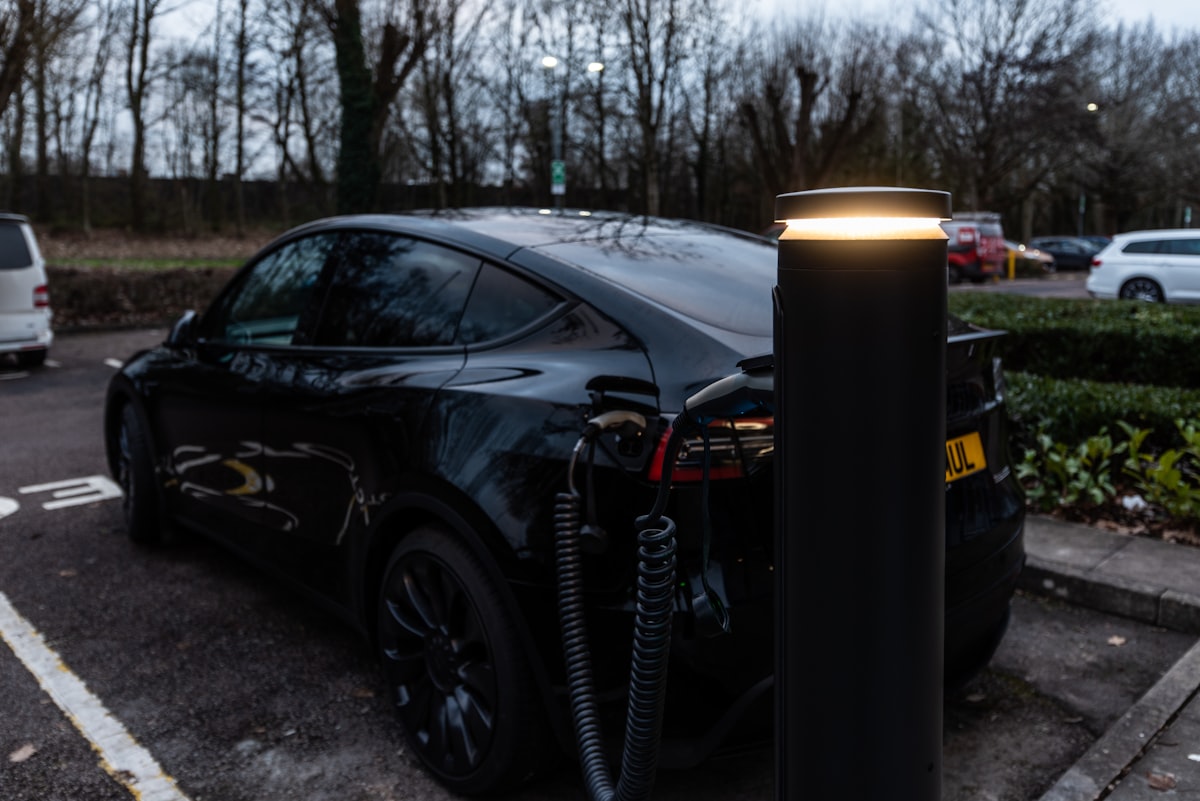
A 32A dedicated wall-box is the upgrade. It requires a qualified electrician, a dedicated circuit, and a budget of roughly N300,000 to N800,000 for hardware and installation. In return, you get 5 to 8 times the charging speed of the standard socket, and that changes everything about how the grid restriction feels.
DC fast chargers are the public option. Qoray Mobility runs 60 kW DC stations in Lagos at N500 per kWh. BYD opened their own station at the Victoria Island showroom. Nationwide, there are approximately 12 commercial public EV charging stations, mainly in Lagos, Abuja, and Sokoto as of late 2025. These are for top-ups on the road, not your daily charging strategy.
The Numbers, Side by Side
Every number below comes from the same technical sources used by EV owners and importers globally. DC fast charge times shown are 10% to 80%, because all three BYD models recommend stopping at 80% on DC to protect long-term battery health.
| Model | Battery | 13A Socket (0-100%) | 32A Wall Charger (0-100%) | DC Fast (10-80%) |
|---|---|---|---|---|
| BYD Dolphin (Dynamic) | 44.9 kWh | ~20 hrs | ~7 hrs | ~38 mins |
| BYD Dolphin (Premium/Sport) | 60.5 kWh | ~26 hrs | ~9.5 hrs | ~35 mins |
| BYD Seal (Standard Range) | 61.4 kWh | ~27 hrs | ~9 hrs | ~34 mins |
| BYD Seal (Performance AWD) | 82.6 kWh | ~36 hrs | ~12.5 hrs | ~37 mins |
| BYD Atto 3 | 60.5 kWh | ~28 hrs | ~9 hrs | ~35 mins |
The 13A Socket: Good for Top-Ups, Painful for Full Charges
Nigeria runs on 240V, 50Hz. A 13A socket delivers a maximum of roughly 3.12 kW in theory, and EV chargers pull around 2.3 to 3 kW in practice. The result: you add 13 to 20 km of range per hour depending on the model. The Atto 3 adds 20 km per hour. The Dolphin and Seal add 13 to 16 km per hour.
For a typical Lagos commute of 50 to 80 km, this means 3 to 6 hours of consistent charging replaces your day's driving. If you get home at 7pm with the grid on, plug in, and it stays on until midnight, you have covered the commute. That part works.
The problem is the full charge. The Dolphin Dynamic, the smallest battery in this group at 44.9 kWh, still needs 20 hours from flat on a 13A socket. Nigeria's grid cannot give you 20 continuous hours. One Nigerian EV owner put it plainly: "Supply ranges from 8 to 14 hrs per day. Some days no power (for days!). I support national grid with solar power."
The practical rule on a 13A socket: never let your battery run below 30%. Live in the middle range, top up every available hour, and treat full charges as a multi-day project, not an overnight task.
The 32A Wall-Box: The Real Solution for Nigerian Homes
A 32A wall-box changes the game. It adds 50 to 61 km of range per hour, roughly 4 times more than the standard socket. For that same 50 to 80 km commute, you need 1 to 2 hours of charging. Even in areas with just 8 hours of daily supply, you can fully recover a day's driving and then some.
All three BYD models cap their onboard AC charger at 7.0 to 7.2 kW on single-phase power. That matches exactly what a 32A wall-box delivers. There is no benefit to fitting a higher-powered charger unless the car supports three-phase charging, and these three do not. A 32A wall-box is the ceiling for home charging on any of them.
Full charge times on the wall-box are honest. The Dolphin Dynamic takes 7 hours. The Seal Performance AWD, with its 82.6 kWh battery, takes 12.5 hours. That last one is worth noting: if your Seal Performance is near-flat and you have an unreliable power supply, even a wall-box may not complete a full charge overnight. The fix is the same as the 13A advice: stay in the middle range, charge regularly, and avoid running to zero.
Wall-box hardware and installation in Nigeria runs N300,000 to N800,000. The wide range reflects different hardware brands and varying installation complexity across Lagos and Abuja. Get at least two local quotes. Qoray Mobility and other Lagos suppliers can point you to approved installers.
DC Fast Charging: Airport Runs and Emergency Top-Ups
DC fast charging bypasses the car's onboard charger and pushes DC current directly into the battery. The speed difference is dramatic. The Seal Standard Range goes from 10% to 80%, adding 319 km of range, in 34 minutes at a full-rated DC station. The Dolphin Dynamic does the same in 38 minutes, adding 235 km.
There is a catch specific to Nigeria. Qoray's public stations in Lagos cap at 60 kW. The Dolphin Dynamic's maximum DC rate is also 60 kW, so it charges at full speed. But the Seal Standard Range accepts up to 110 kW DC and the Seal Performance accepts up to 150 kW. At a 60 kW station, both Seals are throttled down.
Real-world DC charge times at Qoray stations stretch to 55 to 65 minutes for the Seal Performance, rather than the 37 minutes shown in the table above. The Atto 3, which accepts up to 88 kW DC but averages 77 kW over a session, also slows at a 60 kW station, taking around 45 to 50 minutes for 10 to 80%.
The cost is N500 per kWh at Qoray DC stations, compared to N300 per kWh for AC public charging. Charging a BYD Dolphin Dynamic from 10% to 80% at a DC station adds roughly 31 kWh and costs about N15,500 per session. A Seal Standard Range at the same session adds roughly 43 kWh and costs about N21,500.
Use DC fast charging for road trips, emergency top-ups, and the occasional quick session at Jabi Lake Mall or a charging stop on the Lagos-Ibadan expressway. Do not rely on it as your main charging strategy. Frequent DC-only charging, without regular overnight AC sessions, degrades battery health faster over time. All three BYD models limit DC charging automatically at 80% for this reason.
Which Model Charges Fastest?
On a 13A socket
The Dolphin Dynamic wins by a large margin. Its smaller 44.9 kWh battery means it fills faster. For owners who depend on a standard socket, the Dolphin Dynamic is the most practical choice.
On a 32A wall-box
The Seal Standard Range, Seal (Standard), and Atto 3 all take around 9 hours for a full charge. The Dolphin Dynamic finishes in 7 hours. The Seal Performance AWD at 12.5 hours is the outlier, though its 82.6 kWh battery also gives you 400-plus km of range to work with before you need to charge at all.
On DC fast charging
The Seal Standard Range is the fastest, hitting 10% to 80% in 34 minutes at a full-rated station. All five variants in this comparison complete a DC fast charge in under 40 minutes at their rated DC speed, which means a top-up at a Qoray Lagos station is a lunch break, not a day trip.
What Charging Infrastructure Actually Exists Right Now
Nigeria had approximately 12 commercial public EV charging stations as of late 2025, spread across Lagos, Abuja, and Sokoto. That is a thin network for a country of over 220 million people. Qoray Mobility operates DC stations in Lagos. Nigeria's first public fast-charging station opened in Abuja in 2024, run by Possible EVS. BYD opened their dedicated charging station at the Victoria Island showroom in Lagos.
This means public DC charging is genuinely available for Lagos and Abuja owners today, but it is not yet something you plan your driving around. For now, plan around your home setup. The public network is a supplement, not a primary source.
What These Cost on ChargeWay
You do not have to navigate the import process alone. ChargeWay sources quality tested used EVs direct from China at wholesale pricing. Every vehicle is properly inspected before it ships. Here is what you could pay right now:
| Model | FOB Price | Est. Landed Price | Range |
|---|---|---|---|
| BYD Seagull | $10,000 | ~N18,500,000 | 305 km |
| Neta V | $12,000 | ~N22,000,000 | 380 km |
| BYD Dolphin | $16,000 | ~N28,000,000 | 427 km |
These are estimated wholesale prices for quality tested vehicles, shipped direct from China. No middleman markup, no dealer premium. Final prices depend on current exchange rates at time of order. Visit chargeway.africa/cars for live pricing and available stock.
Related Articles
Can You Charge an EV with a Generator in Nigeria?
NEPA goes off at 11pm, your EV is at 18%, and your generator is already running. Here is exactly what you need to know before you plug in.
6 min read
ChargingHow to Charge Your EV at Home in Nigeria
Most Nigerian EV owners never see the inside of a public charging station. They plug in at home every night. Here is exactly how to do it safely, what it costs, and what to do when NEPA is not cooperating.
8 min read
ChargingWhere to Charge Your EV in Lagos (2025 Complete Guide)
Lagos has between 8 and 12 commercial EV charging stations, almost all run by one company. Home charging is how most owners survive. Here is exactly where to plug in, what it costs, and how to set yourself up.
7 min read