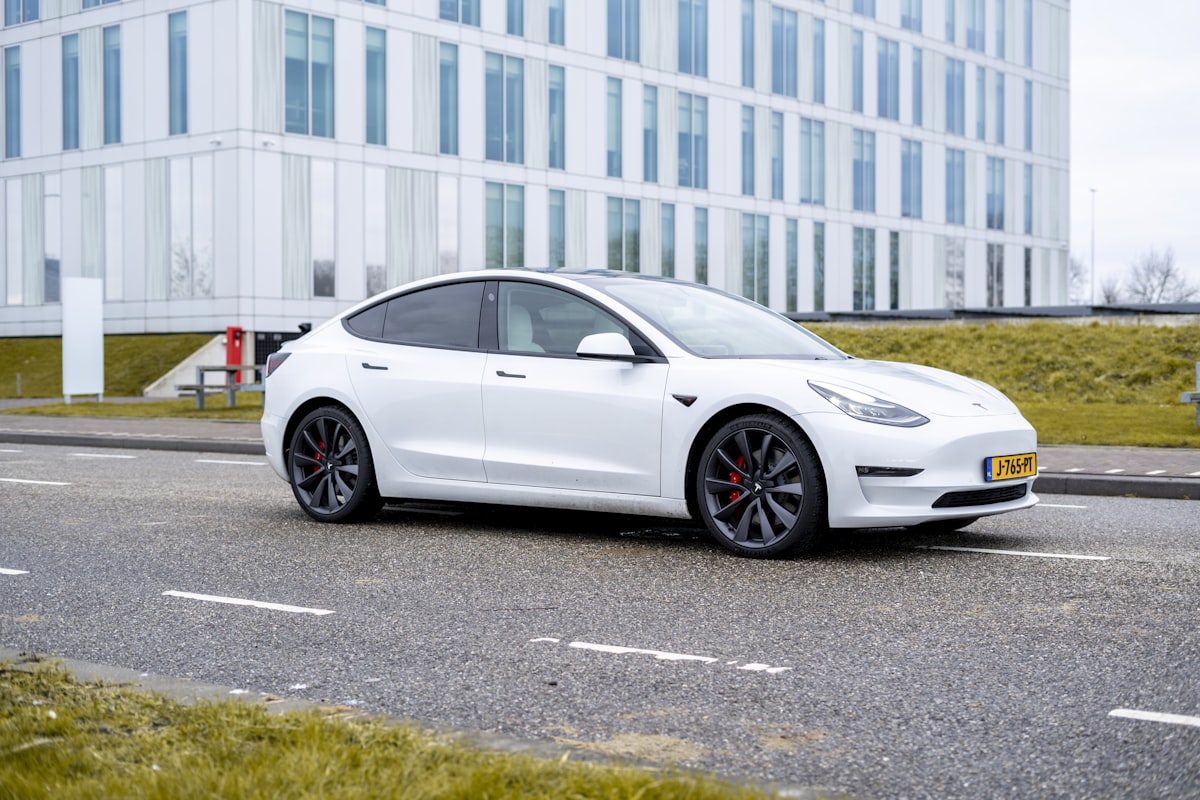
Is It Worth Importing a Tesla Model 3 to Nigeria in 2026?
A Tesla Model 3 can cost N75 million or more by the time it clears Apapa. There is no Supercharger in the entire country. The warranty is void the moment the car crosses the Atlantic. So why are people still doing it? We ran the real numbers.
The Car That Turns Heads at Jabi Lake Mall
Your friend pulls up to the valet stand in a sleek white Tesla Model 3. No engine noise. Just a faint hum and the smooth click of a door. Everyone turns to look. He taps his phone and the car unlocks. You are sold.
Then he tells you how much it cost to get here. And that charging it requires a specific arrangement with his solar inverter. And that the time the 12-volt auxiliary battery died in Ikoyi, there was no Tesla technician to call. He sorted it himself, because the nearest Tesla service center is in South Africa.
That is the honest picture. This guide gives you the whole thing.
What Makes This Purchase Confusing
The Tesla Model 3 is genuinely one of the best cars in the world. The 2023 Highland Long Range AWD does 0 to 100 km/h in 4.4 seconds and has a WLTP range of 629 km on a full charge. The software updates automatically. It holds its value unusually well for a used car.
But none of that was designed with Nigeria in mind. Tesla built its global infrastructure around countries where it operates officially. Nigeria is not one of them. There are zero Tesla Supercharger stations in this country. Tesla's network spans 74,000 chargers across 54 countries, and Nigeria is not among those 54. That number changes everything about how you will live with this car.
On top of that, the warranty you see advertised in the US does not follow the car to Lagos. Tesla's own service manual is explicit: the warranty is only valid in the region where the vehicle was originally purchased. If your battery develops a fault after it lands at Tin Can Island Port, that is your problem.
What It Actually Costs to Get One Here
A used 2025 Tesla Model 3 in the US secondhand market runs $36,000 to $38,000. The 2022 to 2023 variants listed on Jiji.ng are currently going for N75 million to N90 million. A 2020 model is the cheapest you will realistically find, at around N45 million.
Here is how the costs stack up if you are bringing one in yourself rather than buying from a local dealer.
| Cost Item | Amount |
|---|---|
| Used Model 3 purchase price (USA, 2025 model year) | $36,000 to $38,000 |
| Shipping, USA to Nigeria (RoRo, most common) | $1,500 to $3,000 |
| Shipping, USA to Nigeria (container, more secure) | $3,000 to $5,000 |
| Port clearing fee at Apapa or Tin Can Island (reference figure) | N17,500,000 to N20,000,000 |
| EV import duty (10 to 20% of CIF value) | Depends on declared value |
| NAC levy (15% of CIF value) | Depends on declared value |
| ECOWAS levy (0.5% of CIF value) | Minimal |
A few things to understand about that table. First, EVs are exempt from VAT and Import Adjustment Tax in Nigeria. Conventional vehicles face combined tariffs exceeding 70%. EVs pay only 10 to 20% import duty plus the 15% NAC levy and a negligible ECOWAS charge. Still a significant sum when your car's CIF value is $40,000 or more, but meaningfully less than petrol-vehicle rates.
Second, the clearing fee figures above are from a 2022 reference for a Model S. A Model 3 will be somewhat lower, but the naira has weakened considerably since then. Budget conservatively. At the current CBN rate of N1,386 per dollar, that $38,000 car is already N52.7 million before a single naira of import cost is added.
Third, Nigeria's 12-year vehicle age import rule applies to EVs too. The oldest car you can legally import as of 2026 is a 2014 model year. The Model 3 only launched in 2017, so you are fine on eligibility, but this rule closes the door on cheap older units if they ever appeared.
Charging: Where Most People Get Stuck
Nigeria has fewer than 12 public EV charging stations nationwide as of late 2025. Compare that to 27,000 petrol stations. If you picture pulling up to a fast charger the way you currently pull into a filling station on Adeola Odeku Street, that picture does not exist yet.
What Nigerian Tesla owners actually do is charge at home. And that comes with its own complications, because Nigeria's electricity grid supplies roughly 4,000 to 4,500 MW against a national demand of approximately 30,000 MW. The grid runs at about 15% of what the country actually needs. Six collapses in 2023 alone. Only 55% of Nigerians are even connected to the national grid.
If you are in a Band A area (your DisCo supplies 20 or more hours of electricity daily), your home charging cost is approximately N206 to N229 per kWh. A full charge on the base Model 3's 57 kWh battery costs roughly N11,742 to N13,053 at that rate. That is genuinely cheap compared to filling a petrol tank.
The problem is that Band A supply covers a small minority of Nigerian consumers. Most owners in Lagos and Abuja pair their Tesla with a solar inverter system. A 10 kW solar array can support both household needs and Level 2 EV charging. Lagos gets approximately 5 hours of peak sunlight daily, which makes solar viable. Budget N150,000 to N500,000 for the inverter component alone, on top of panels and installation.
For the rare times you need a public fast charger, stations operated by providers like Qoray Mobility charge approximately N500 per kWh. A full charge that way costs around N28,500 on the base Model 3. Still cheaper than petrol, but not the bargain home charging is.
The Autopilot Problem Nobody Talks About
The Model 3's Autopilot feature requires clear white lane markings to function. Over 50% of Nigerian roads lack those markings. Full Self-Driving is not available in Nigeria at all. It is currently limited to the US, Canada, China, Mexico, and a handful of other countries. You are paying for a technology suite that will mostly sit idle on Nigerian roads.
Service and Parts: The Real Long-Term Risk
There is no official Tesla dealership or service center in Nigeria. Carmedis in Lagos is one of the few workshops offering professional EV repair compatible with Tesla vehicles. For anything beyond what they can handle, you are looking at shipping parts internationally and waiting.
The 12-volt auxiliary battery is the most common failure point for Nigerian Tesla owners, typically lasting only 2 to 3 years in the heat. That is a manageable fix. The battery replacement scenario is the one that should make you think carefully. Out-of-warranty Tesla Model 3 battery replacement costs $11,000 to $22,000 in the US. In Nigeria, with no official service presence, you would need to arrange that repair abroad or find a specialist here. The good news: batteries are genuinely durable. Tesla Model 3 batteries retain 85 to 88% of original capacity after 200,000 miles. Expected lifespan is 300,000 to 500,000 miles. You are unlikely to need a replacement for a very long time under normal use.
Software updates are another friction point. Updates can fail to download or pause mid-update due to weak WiFi. Owners in countries without official Tesla service have also reported regional update restrictions on US-market vehicles.
Petrol vs. Tesla: Running Cost Comparison
| Cost Item | Petrol Car (similar size) | Tesla Model 3 |
|---|---|---|
| Fuel or charge per full tank | ~N63,500 (50L at N1,270/L) | N11,742 to N13,053 (home, Band A) |
| Fuel type dependency | NNPCL pump prices, volatile | Electricity or solar, more stable |
| Oil changes | Every 5,000 to 10,000 km | None required |
| Transmission service | Yes | None required |
| Engine maintenance events | Multiple per year | Minimal (brakes, tyres, 12V battery) |
| Generator fuel savings | N/A | Significant if solar-charged |
Petrol in Lagos hit N1,270 per litre by March 2026. Ride-hailing platforms in Nigeria that have switched to EVs report 40% operational cost savings. The running-cost case for an EV is strong. The question is always whether you can absorb the upfront cost and manage the infrastructure gaps.
Who Should Buy a Tesla Model 3 in Nigeria
Be honest with yourself against this list before you commit N75 million or more.
This makes sense for you if:
- You live in Lagos (Victoria Island, Lekki, Ikoyi, Ikeja) or Abuja and already have a reliable solar inverter setup at home.
- You have a secondary petrol car for long trips or days when charging logistics get complicated.
- You drive predominantly within the city and your daily range is well under the 513 km the base Model 3 covers on a charge.
- You can absorb a significant parts or repair cost without it being a crisis.
- Prestige and the technology experience matter to you alongside the economics.
Think very carefully if:
- You depend entirely on grid electricity with no solar backup. Load-shedding will make charging unreliable and expensive through generator fuel.
- You are in Port Harcourt or any city outside Lagos and Abuja. Service and charging options thin out dramatically.
- You are expecting Autopilot or Full Self-Driving to work on Nigerian roads. Most of the time, they will not.
- You want a warranty you can actually use. There is not one for you here.
- Your budget is at the very limit. Surprise costs in this ownership experience are real.
Where Nigeria's EV Market Is Going
Nigeria is moving, even if slowly. Approximately 15,000 to 20,000 EVs are registered in the country as of early 2025, representing 0.5 to 1% of the total vehicle fleet. The market grew 11.4% in 2025. The government has committed to 100% zero-emission new car sales by 2040 and approved N58 billion in December 2025 for 200 electric buses.
The infrastructure is being built. Right now, you are an early adopter, and early adoption in Nigeria requires self-sufficiency. As transport economist Lanre Bakare put it: "We cannot talk about electric vehicles in a country where many households still struggle to get four hours of electricity per day." That is the honest current reality. Plan accordingly.
What These Cost on ChargeWay
You do not have to navigate the import process alone. ChargeWay sources quality tested used EVs direct from China at wholesale pricing. Every vehicle is properly inspected before it ships. Here is what you could pay right now:
| Model | FOB Price | Est. Landed Price | Range |
|---|---|---|---|
| Tesla Model 3 | $35,000 | ~N58,000,000 | 513 km |
These are estimated wholesale prices for quality tested vehicles, shipped direct from China. No middleman markup, no dealer premium. Final prices depend on current exchange rates at time of order. Visit chargeway.africa/cars for live pricing and available stock.
Related Articles
Best 7-Seater EVs You Can Import to Nigeria in 2025
Nigeria's average household is 5 people before you count the uncle who always needs a lift. Here is your complete guide to the three 7-seater EVs worth importing right now, with real landed costs.
7 min read
Buying GuideThe 5 Best BYD Models for Nigerian Roads in 2025
BYD finally has an official Nigerian dealer. We rank all five models by what actually matters: ground clearance, price in Naira, and real-world range.
7 min read
Buying GuideBest EVs for Lagos Traffic: Real Costs, Real Range
Lagos is the world's most congested city. But the gridlock that drains your petrol tank is quietly recharging an EV battery. Here are the best EVs for it.
7 min read