How to Import a Tesla to Nigeria: The Honest, Step-by-Step Guide
No Superchargers, no official service centers, and a navigation system locked to Texas. Here's exactly how Nigerians import Teslas anyway, and what to know before you wire a dollar.
The Car That Arrived Without a Map
A buyer in Lekki paid close to N90 million for a 2022 Tesla Model 3, drove it out of Apapa Port, turned onto the expressway, and opened the navigation screen. The car had no idea where it was. Not Lagos. Not Nigeria. Not Africa. Just a blank tile where the map should be, because the software still thought it was somewhere in the continental United States.
That story is not a warning to scare you off. It is a briefing. Tesla is genuinely one of the most remarkable cars you can own in this country, but it comes with a specific set of challenges you will not read about in any American review. This guide covers all of them, plus the exact steps to get one legally through Apapa or Tin Can Island Port and into your garage.
Who This Guide Is For
You are seriously considering a Tesla, not just dreaming about one. You want to know the actual process: the documents, the agents, the duties, the timelines, and the things that go wrong. You are comfortable with the fact that no official Tesla presence exists in Nigeria yet. And you want real numbers, not vague estimates.
This guide focuses on the Model 3 and Model Y. Both are left-hand drive, correctly configured for Nigerian roads. The Model 3 launched in 2017 and the Model Y in 2020, so both sit comfortably within Nigeria Customs' 12-year age limit. Both are widely available in the US used market.
The Step-by-Step Import Process
Step 1: Choose Your Tesla and Your Source
Your two best bets are US auto auction platforms (Copart and IAAI) or private seller platforms like Cars.com and CarGurus. Specialist exporters also handle Tesla sourcing directly. Dealers like Carloha operate as informal intermediaries if you prefer a single point of contact.
Before you pay anything, run the VIN on CARFAX or AutoCheck. You are looking for a clean title. Salvage-title Teslas from US auction houses are cheaper, but they carry significantly higher inspection risk at Nigerian ports. NCS officers check for VIN tampering and chassis consistency. A salvage vehicle that fails inspection faces delays, fines, or seizure. The savings rarely justify that risk.
Avoid any Tesla manufactured before 2015. Nigeria Customs enforces a strict 12-year age limit, and vehicles outside that window are banned from import entirely. The original Tesla Model S launched in 2012, which puts early variants outside the importable window.
Step 2: Hire a Licensed Customs Clearing Agent Before You Buy Anything
This step comes before you pay for the car. Not after. A Nigeria Customs Service-licensed agent will manage your Form M, SONCAP coordination, PAAR filing, and port clearance. Expect to pay $500 to $1,200 for their services. Ask for their CAC registration number and NCS licensing number. Verify both.
The cost of getting this wrong is severe. Under Nigeria's 2025 enforcement rules, unlicensed imports face fines of N500 million per shipment, plus vehicle confiscation. Using an unlicensed agent is not a calculated risk. It is a guaranteed way to lose both the car and the money.
Step 3: Open a Form M Through Your Bank
Submit your vehicle invoice and purchase documents to an Authorized Dealer Bank to open a Form M on the Nigerian Trade Platform. Every import above $10,000 requires this. The bank validates your documents and forwards the approved Form M to Nigeria Customs Service.
This step must happen before the car ships. Shipping before Form M approval means customs rejection when the vehicle arrives. There is no workaround for this sequence.
Step 4: Get Your SONCAP Certificates
Before shipment, engage a SONCAP-accredited conformity assessment body. They issue two certificates: a Product Certificate and a Shipment Certificate. These confirm the vehicle meets Euro II standards, which EVs comfortably satisfy. You then activate both certificates on Nigeria's online Single Window system.
No SONCAP, no clearance. The process cannot be done after the car arrives. Arrange it before the vehicle leaves the US.
Step 5: Arrange Shipping
You have two options from the US to Nigeria. Roll-on/Roll-off (RoRo) shipping runs $1,500 to $3,000 per vehicle and is cheaper, but the car is exposed on deck throughout the voyage. Container shipping runs $3,000 to $5,000 and is significantly more protective. For a car worth N75 million or more, the extra $1,500 to $2,000 for a container is worth it.
Ocean transit from the US to Nigeria takes 26 to 35 days. Your two main arrival ports are Apapa Port and Tin Can Island Port, both in Lagos. Your clearing agent will advise which is better for your shipment. Secure your Bill of Lading and Marine Insurance Certificate before the vessel departs.
Step 6: Clear Customs at Port
When the vehicle arrives, your clearing agent files the Single Goods Declaration on the NICIS II portal. Nigeria Customs processes the Pre-Arrival Assessment Report (PAAR) and generates a final duty valuation. You pay duties through the REMITA government payment platform.
Physical inspection follows. NCS officers check VIN, chassis, and documentation for consistency. With a competent agent and clean paperwork, clearance takes about 5 working days. Apapa congestion regularly extends this. Budget your timeline accordingly.
On duties: EVs in Nigeria are exempt from VAT (7.5%) and Import Adjustment Tax. They are subject to Import Duty (10 to 20% of CIF value), NAC Levy (15% of CIF value), and ECOWAS Trade Levy (0.5%). Total effective duty burden lands between 25.5% and 35.5% of CIF value. Compare that to conventional vehicle duties, which exceed 70% combined. The EV exemptions are real and they are significant.
Step 7: Register and Set Up Your Tesla for Nigeria
Complete vehicle registration with the FRSC. Then address the software reality.
Go to tesla.com and update your Tesla account country to Nigeria. Then contact Tesla Support directly and request a region reconfiguration for the vehicle. Understand that Tesla rarely grants this for grey-market vehicles in unsupported countries. The in-car navigation will most likely remain locked to the US region. You will see a map on screen but turn-by-turn routing will not work correctly.
The workaround that actually works: Google Maps and Waze both run through the Tesla browser and function normally. Install them. That is your navigation setup for now.
Also check and likely replace the 12V auxiliary battery. In Nigeria's climate, it typically lasts only 2 to 3 years, and it is the most commonly reported cause of breakdown among Nigerian Tesla owners. Replacing it on arrival is cheap insurance.
Import Timeline
| Phase | Duration | Key Actions |
|---|---|---|
| Pre-purchase setup | 1 to 2 weeks | Hire agent, open bank relationship, VIN check |
| Form M approval | 1 to 2 weeks | Submit to ADB, await NCS approval |
| SONCAP certification | 1 to 2 weeks (concurrent) | Engage conformity body, activate on Single Window |
| Ocean shipping | 26 to 35 days | RoRo or container from US port to Lagos |
| Port clearance | 5 to 30 days | PAAR filing, duty payment, physical inspection |
| Registration and setup | 1 week | FRSC registration, software setup, 12V battery check |
| Total realistic range | 45 to 90 days | Plan for 3 months end-to-end |
What This Actually Costs
| Cost Item | Amount | Notes |
|---|---|---|
| Used Tesla Model 3 (2022-2023), US purchase | Around $25,000 | Clean title, good condition |
| Container shipping (USA to Lagos) | $3,000 to $5,000 | Recommended over RoRo for Teslas |
| Marine insurance | Included or separate | Mandatory document for clearance |
| Customs duties (25.5 to 35.5% of CIF) | Varies by declared value | No VAT, no IAT on EVs |
| Clearing agent fee (Lagos port) | $500 to $1,200 | NCS-licensed agent required |
| Total port clearing (all-in estimate) | N2,500,000 to N3,000,000+ | Higher for Teslas due to vehicle value |
| SONCAP certification | Varies by body | Required before shipment |
| Home wall box charger installation | N150,000 to N500,000 | Essential for daily charging |
| Nigeria market asking price (Model 3, 2022-2023) | N75,000,000 to N90,000,000 | All-in landed cost already reflected |
| Tesla Model Y (2024) in Nigeria | N105,000,000 to N150,000,000 | Jiji.ng asking prices, April 2026 |
A useful mental model: the total landed cost can approach twice the original US purchase price when you factor in duties, NAC levy, shipping, clearing fees, and FX conversion at the CBN rate of N1,386.72 per dollar. A Tesla that costs $25,000 in Ohio does not cost $25,000 by the time it reaches your driveway in Lekki.
The Tesla-Specific Challenges in Nigeria
No Superchargers. None.
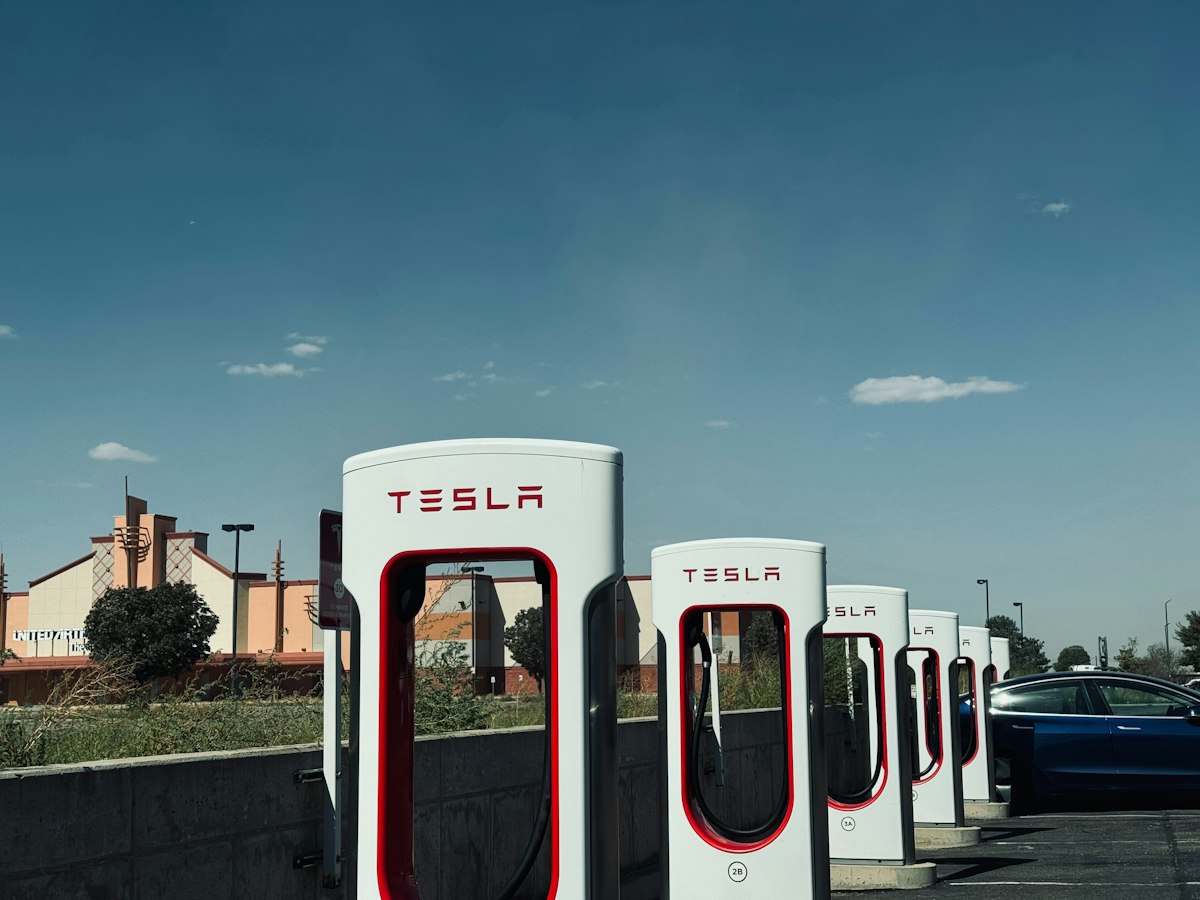
The Tesla Supercharger network covers 54 countries and more than 74,000 chargers worldwide. Nigeria is not on the list. No African country south of Morocco has a Supercharger as of April 2026. Africa's first official Tesla presence opened in Casablanca in February 2026. Tesla has mentioned Nigeria in its future expansion plans, but no timeline is confirmed.
Your charging strategy is built around home. You will need a 240V Level 2 wall box charger, which delivers 7 to 11 kW and costs N150,000 to N500,000 to install. Most Nigerian Tesla owners pair this with a solar-inverter backup system to work around NEPA outages. Home grid electricity runs N206 to N229 per kWh on Band A tariff, making home charging the cheapest option by far. That is the practical reality.
For public charging, Qoray Mobility operates AC and DC fast chargers at 20 Marina Road Lagos, Sheraton Hotel Ikeja, and Adeola Odeku Victoria Island. DC fast charging is N500 per kWh. AC is N300 per kWh. But there is a catch: US-sourced Teslas use the NACS/CCS1 connector standard. Nigerian public chargers use Type 2, CCS2, or CHAdeMO. You need an adapter to use them. Buy the adapter before you need it, not during a 9pm emergency on Ozumba Mbadiwe.
Navigation Does Not Work Out of the Box
As described above, the in-car Tesla navigation is region-locked to the US. Tesla's in-car SIM is also region-specific, which can affect mobile data connectivity, over-the-air updates, and live traffic data. Tesla rarely reconfigures grey-market vehicles for the region change. Use Google Maps or Waze through the browser. They work fine. Third Mainland Bridge is still Third Mainland Bridge regardless of what Tesla's servers think.
No Service Center, No Warranty
There are no Tesla-certified service centers in Nigeria. Carmedis in Lagos is one of the few independent workshops that professionally services Tesla vehicles. The Tesla warranty from a North American purchase is void here. Their warranty explicitly limits repairs to the region of purchase. All repairs are at your expense.
Simple consumables like tyres, wiper blades, and brake pads can be sourced locally. But if you need anything drivetrain-related, a high-voltage battery component, or significant electronics, those parts must be imported. Add weeks of lead time and serious cost. A Tesla Model 3 battery replacement runs $11,000 to $22,000 in the US. In Nigeria, you are sourcing and importing that repair from scratch.
One practical note: Tesla offers an Independent Repair Training Program for third-party workshops globally. There is no publicly confirmed certified independent repair provider in Nigeria as of April 2026, but the pathway exists for workshops willing to pursue it.
Autopilot and Software Features Are Compromised
Tesla Autopilot requires clear white lane markings to function. Over 50% of Nigerian roads lack them. Autopilot will be largely non-functional on most roads you drive in Lagos or Abuja. Full Self-Driving is not available in Nigeria at all. As of early 2026, FSD is only supported in the US, Canada, China, Mexico, Puerto Rico, Australia, New Zealand, and South Korea. If you paid for FSD as part of your US purchase, you cannot use it here.
The Grey-Market Risk Horizon
This one requires honest attention. When Tesla launched officially in Thailand, more than 1,000 grey-market Tesla owners who had privately imported vehicles before the launch found themselves denied official service and software support. Tesla Nigeria does not exist yet, but if and when it does, grey-market vehicles imported prior could face the same treatment.
That is a real risk. It is not imminent. But it is worth knowing before you commit N90 million.
Pitfalls to Avoid
- Shipping before Form M is approved. This sequence is non-negotiable. Reverse it and the car gets rejected at port.
- Using an unlicensed clearing agent. The penalty under 2025 enforcement rules is N500 million per shipment plus confiscation. There is no negotiating with that outcome.
- Buying a salvage-title Tesla from Copart without professional inspection. Flood damage and structural damage are not always visible. Hire an inspector before bidding.
- Forgetting the SONCAP certificates. They cannot be obtained after shipment. Arrange before the car leaves the US.
- Not checking the 12V auxiliary battery. It is the most common cause of breakdown for Nigerian Tesla owners. Replace it proactively.
- Assuming the in-car navigation will work. It will not, unless Tesla agrees to reconfigure your region, which rarely happens for grey-market vehicles. Plan for Google Maps from day one.
- Expecting the connector to match Nigerian public chargers. US Teslas use NACS/CCS1. Buy a CCS2 adapter before you need it.
- Importing a pre-2015 vehicle. Nigeria Customs bans them. The original Tesla Model S from 2012 is outside the importable window.
Your Next Steps
If you have read this far and you are still interested, here is what to do this week.
- Decide on Model 3 or Model Y. The Model 3 is more accessible at N75 million to N90 million landed. The Model Y is more practical for Nigerian roads, offers more ground clearance, and runs N105 million to N150 million. Pick your number first.
- Find a licensed NCS clearing agent. Ask for their CAC registration number and NCS licensing number before any further conversation. Verify both independently.
- Open a relationship with an Authorized Dealer Bank that handles vehicle Form M processing. Tell them your timeline so they can flag any document gaps early.
- Budget honestly. A used Model 3 that costs $25,000 in the US will land in Lagos at roughly double that once duties, shipping, clearing, and FX are applied. Use N1,386.72 per dollar as your base rate.
- Plan your home charging setup now, not later. A wall box charger plus solar backup is not optional for Lagos or Abuja. Factor N150,000 to N500,000 into your total budget from the start.
The Tesla is a genuinely excellent car. The people who own them in Nigeria and love them went in knowing exactly what they were getting into. Now you do too. Call the bank. Find the agent. Start the clock.
What These Cost on ChargeWay
You do not have to navigate the import process alone. ChargeWay sources quality tested used EVs direct from China at wholesale pricing. Every vehicle is properly inspected before it ships. Here is what you could pay right now:
| Model | FOB Price | Est. Landed Price | Range |
|---|---|---|---|
| Tesla Model 3 | $35,000 | ~N58,000,000 | 513 km |
These are estimated wholesale prices for quality tested vehicles, shipped direct from China. No middleman markup, no dealer premium. Final prices depend on current exchange rates at time of order. Visit chargeway.africa/cars for live pricing and available stock.
Related Articles
Apapa vs Tin Can Island: Which Port Should You Use to Import Your EV?
Lagos has two major ports clearing cars. For a tokunbo Camry, the choice barely matters. For an EV, it affects your timeline and your budget. Know this before a single dollar moves.
8 min read
Import GuideHow to Avoid Getting Scammed When Importing an EV to Nigeria
From fake Facebook listings to port container disappearances, EV import fraud in Nigeria is sophisticated and expensive. Here is exactly what to check before you send a single naira.
8 min read
Import GuideHow to Choose a Clearing Agent for Your EV Import in Nigeria
Your EV is sitting at Apapa. The wrong clearing agent will cost you N300,000 in demurrage, hand you forged duty receipts, or disappear entirely. Here is how to pick the right one.
8 min read