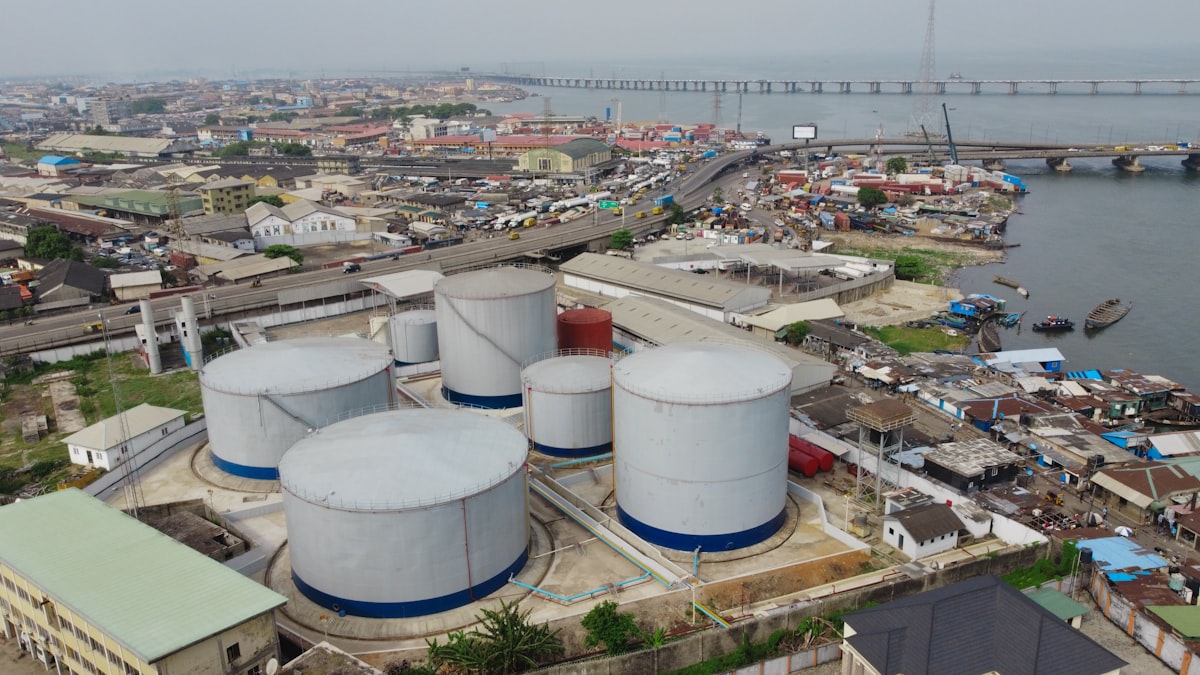
Apapa vs Tin Can Island: Which Port Should You Use to Import Your EV?
Lagos has two major ports clearing cars. For a tokunbo Camry, the choice barely matters. For an EV, it affects your timeline and your budget. Know this before a single dollar moves.
The Container Sitting at the Port
Your EV is on the water. Forty-foot container, lithium-ion battery at 30% charge, Bill of Lading sitting in your email. The shipping line's arrival notice says Lagos. Then your clearing agent calls: "Which port?" You pause. You assumed there was only one answer.
There are two. And they are not equal.
What This Guide Covers
Lagos has two major ports handling car imports: Apapa Port Complex and Tin Can Island Port Complex, about 7 kilometres apart on the same stretch of water. Most Nigerian importers treat them as interchangeable. For a tokunbo Camry, maybe. For an electric vehicle, the differences in infrastructure, haulage cost, and customs handling are significant enough to affect your timeline and your budget.
This guide walks through both ports, the clearing process step by step, the real costs, and the specific EV quirks that most clearing guides leave out entirely.
Know Your Ports
Apapa: The Giant
Apapa is Nigeria's largest port by trade volume. In Q1 2025, it accounted for 71.6% of Nigeria's total trade value, processing N25.79 trillion worth of goods. Everything comes through Apapa: petroleum products, bulk cargo, containers, general merchandise. It is Lagos's economic engine and its biggest daily headache.
Apapa is not a vehicle-specialist port. It handles cars, but cars are one commodity among hundreds. The customs officers, the terminal layouts, the logistics chains, all of it is designed for general cargo at scale.
Tin Can Island: The Vehicle Hub
Tin Can Island Port Complex has five terminals. Terminal E is the one you care about: PTML, Ports and Terminal Multiservices Limited. PTML is West Africa's largest Roll-on/Roll-off (Ro-Ro) terminal, with over 100,000 square metres of dedicated vehicle space in its main facility, plus an additional 130,000 square metres at an off-dock facility at Mile 2.
This is where car shipping lines go. The customs units here work vehicle clearances specifically. The agents know the paperwork. The yards are built for cars, not containers of frozen fish.
Tin Can Island recorded 22.7% of all ship calls across Nigerian ports in 2025, despite handling only 9.5% of total trade value. That ratio tells you something: it receives many vessels carrying lower-value cargo per ship. Vehicles, specifically.
The EV Shipping Problem Nobody Mentions
Here is what most import guides skip entirely. Ro-Ro shipping, where cars drive onto a ship and drive off at destination, is cheaper and simpler than container shipping. Prices from the USA to Nigeria run $800 to $1,500 for Ro-Ro. Sounds great. Except most shipping lines will not accept electric vehicles under Ro-Ro services because of lithium-ion battery safety regulations.
Your EV must be containerized. Container shipping from the USA runs $1,200 to $2,500. From China, ocean freight alone is approximately $600, plus roughly $1,000 for local inland transport and port handling. That means Tin Can Island's famous Ro-Ro advantage at PTML does not directly apply to you. You are arriving by container, likely at Terminal B (TICT) rather than Terminal E.
The good news: Tin Can Island handles containers too. The better news: it handles them with significantly less road chaos than Apapa.
Step-by-Step: Clearing Your EV
Step 1: Get Your Documents in Order Before the Ship Arrives
Do not wait until your container is at berth to start paperwork. That is how demurrage charges accumulate. You need these documents ready:
- Form M: Mandatory foreign exchange and import registration, filed on the Nigerian Trade Platform before the goods ship
- Bill of Lading: Issued by your shipping line
- PAAR (Pre-Arrival Assessment Report): Filed through the Nigeria Customs Service portal before arrival; this determines your assessed customs duty
- SONCAP Certificate: The Standard Organisation of Nigeria Conformity Assessment Programme certificate is mandatory for EV imports. You need both a Product Certificate (PC) and a Shipment Certificate (SC). Without both, customs will not release your car.
- Commercial Invoice and Packing List: From your supplier
The SONCAP requirement catches first-time EV importers off guard. Get this started the moment you finalise your purchase overseas.
Step 2: File Your SGD (Single Goods Declaration)
Your clearing agent files the SGD in the ASYCUDA system. This triggers the formal customs assessment process. The officer will use the VIN (Vehicle Identification Number) valuation database to determine the CIF (Cost, Insurance, Freight) value on which duties are calculated.
Be aware: stakeholders have reported that this VIN valuation system can inflate assessments by up to 300%, using valuations that do not reflect actual market prices. This is documented, not rumour. Your agent needs to be prepared to dispute inflated assessments in writing. Ask whether they have done it before.
Step 3: Pay Your Duties
EVs currently attract import duty of 10 to 20% of CIF value, plus a 15% National Automotive Council (NAC) levy. You are also exempt from VAT and the Import Adjustment Tax (IAT) under the VAT Modification Order 2024, effective September 2024. Compare that to a conventional tokunbo, which faces a 35% base duty plus a 35% NAC levy, effectively around 70% of CIF. For an EV, you are paying significantly less.
There are additional line items regardless of which port you use:
- Port surcharge: 7% calculated on your duty amount
- CISS fee: 1% of CIF value
- ECOWAS Trade Levy: 0.5% of CIF value
- Terminal handling charge: approximately N250,000 for a 40ft container
- Clearing agent fee: approximately N250,000
Step 4: Physical Examination and Release
After duty payment, customs may request a physical examination of the container. At Tin Can Island, vehicle clearance for a container with documentation in order takes an estimated 3 to 5 business days. Port operating hours for clearing are weekdays 10:00 to 16:00, with releases possible until 20:00. No weekend operations, so plan accordingly.
Once cleared, you receive your gate-out: the final authorisation to exit the port.
Step 5: Haulage to Your Destination
This is where the port choice has the most visible impact on your wallet.
Haulage from Tin Can Island to Alaba International or Aspanda markets runs approximately N350,000 for a 40ft container. The same journey from Apapa historically cost around N900,000, though the Eto Electronic Call-Up System, which became fully operational in September 2025, brought Apapa haulage costs down significantly. Truck turnaround at Apapa fell from up to 28 days to 2 to 3 days when the system works. Haulage from Apapa to Sango in Ogun State dropped from N800,000 to N900,000 down to N250,000 to N330,000.
The problem: the Eto system faced gridlock and corruption allegations by October 2025, barely a month after full deployment. Tin Can Island's lower haulage cost is structural, not dependent on a system running correctly. The roads are simply less congested.
Timeline: What to Expect
| Phase | Tin Can Island | Apapa |
|---|---|---|
| Document preparation (Form M, SONCAP, PAAR) | 2-4 weeks before arrival | 2-4 weeks before arrival |
| Vessel transit (China example, Grimaldi service) | 27 days | Varies by line |
| Berth-to-gate (documentation complete) | 3-5 business days | 3-5 business days (plus congestion risk) |
| Haulage to market or home | Same day | Same day (when Eto is functional) |
| Total dwell time (Nigerian average, both ports) | 18-21 days (global benchmark: 4 days) | 18-21 days (global benchmark: 4 days) |
The 18 to 21 day average applies across both ports. About 73% of that delay comes from paperwork and administrative bottlenecks, not physical infrastructure. The government's National Single Window (NSW), launched March 2026, targets reducing dwell time to under 7 days. That is the goal. Right now, budget for 3 to 4 weeks from vessel arrival to vehicle in your hands.
Cost Comparison
| Cost Item | Rate | Notes |
|---|---|---|
| Ocean freight (China, per container) | ~$600 | Both ports |
| Inland transport and port handling (China) | ~$1,000 | Both ports |
| Container shipping (USA, per container) | $1,200 to $2,500 | EV must containerize; no Ro-Ro |
| Import duty on EV | 10 to 20% of CIF | Both ports |
| NAC levy on EV | 15% of CIF | Both ports |
| VAT and IAT | Exempt | VAT Modification Order 2024 |
| Port surcharge | 7% of duty amount | Both ports |
| CISS fee | 1% of CIF | Both ports |
| ECOWAS Trade Levy | 0.5% of CIF | Both ports |
| Terminal handling (40ft container) | ~N250,000 | Both ports |
| Clearing agent fee | ~N250,000 | Both ports |
| Haulage to Alaba/Aspanda | ~N350,000 (Tin Can) vs ~N900,000 (Apapa, pre-reform) | Tin Can consistently cheaper |
| Total landed cost range (shipping plus duties) | $5,000 to $15,000 | Depends heavily on CIF value |
Pitfalls to Avoid
- Skipping SONCAP. There is no workaround. Without both the Product Certificate and Shipment Certificate, your car stays in the terminal. Start this process before the car ships.
- Trusting the VIN valuation without verifying. The customs VIN database has been reported to overvalue vehicles by up to 300%. Bring a reliable market valuation from your origin country and instruct your agent to contest inflated assessments in writing.
- Assuming your car can Ro-Ro. Check with your freight forwarder before booking. If they say your EV qualifies for Ro-Ro, get that in writing and verify directly with the shipping line. Most will refuse because of lithium-ion battery safety rules.
- Ignoring the vehicle age limit. Nigeria's customs enforcement allows only vehicles manufactured within the past 12 years. As of 2025, that means 2013 or newer. Some customs officers apply a stricter 10-year limit (2015 or newer). That affordable 2012 Nissan Leaf may not clear at all.
- Not accounting for demurrage. Once your free days at the terminal expire, daily storage charges kick in. With 18 to 21 day average dwell times, those charges add up fast. Have your documents ready before the vessel arrives, not after.
- Choosing an agent by price alone. A cheap agent who cannot fight an inflated VIN assessment will cost you far more than the amount you saved on their fee. Ask specifically whether they have cleared EVs before, and how many.
- Expecting weekend clearing. Port operating hours are weekdays only, 10:00 to 16:00 for clearing, releases until 20:00. A vessel arriving Thursday evening is effectively a Monday problem. Build that into your timeline.
- Ignoring the 15% NAC levy. Many buyers focus on the EV duty reduction (10 to 20% versus 70% for petrol vehicles) and miss that the 15% NAC levy still applies. It is not a small line item.
So Which Port?
For an EV import in 2026, Tin Can Island is the better default. Not because Apapa cannot clear your car, but because Tin Can Island has dedicated vehicle infrastructure, experienced customs units, consistently lower haulage costs, and less road congestion between the port and your destination.
If your shipping line defaults to Apapa, ask whether a Tin Can Island routing is available. The question costs nothing.
The one exception: if switching to Tin Can Island delays your shipment by weeks, do not wait. An experienced clearing agent can handle an EV at Apapa. The Eto reforms have improved turnaround meaningfully when the system is working. Budget for the higher haulage cost and have your paperwork absolutely complete before the vessel arrives.
The port choice matters. The paperwork matters more.
What These Cost on ChargeWay
You do not have to navigate the import process alone. ChargeWay sources quality tested used EVs direct from China at wholesale pricing. Every vehicle is properly inspected before it ships. Here is what you could pay right now:
| Model | FOB Price | Est. Landed Price | Range |
|---|---|---|---|
| BYD Seagull | $10,000 | ~N18,500,000 | 305 km |
| Neta V | $12,000 | ~N22,000,000 | 380 km |
| BYD Dolphin | $16,000 | ~N28,000,000 | 427 km |
| MG MG4 Electric | $20,000 | ~N34,000,000 | 450 km |
These are estimated wholesale prices for quality tested vehicles, shipped direct from China. No middleman markup, no dealer premium. Final prices depend on current exchange rates at time of order. Visit chargeway.africa/cars for live pricing and available stock.
Related Articles
How to Avoid Getting Scammed When Importing an EV to Nigeria
From fake Facebook listings to port container disappearances, EV import fraud in Nigeria is sophisticated and expensive. Here is exactly what to check before you send a single naira.
8 min read
Import GuideHow to Choose a Clearing Agent for Your EV Import in Nigeria
Your EV is sitting at Apapa. The wrong clearing agent will cost you N300,000 in demurrage, hand you forged duty receipts, or disappear entirely. Here is how to pick the right one.
8 min read
Import GuideEvery Document You Need to Import an EV into Nigeria
Most EV imports stuck at Apapa are not stuck because of the car. They are stuck because one form arrived late. Here is the complete 14-document checklist, in the exact order that matters.
11 min read