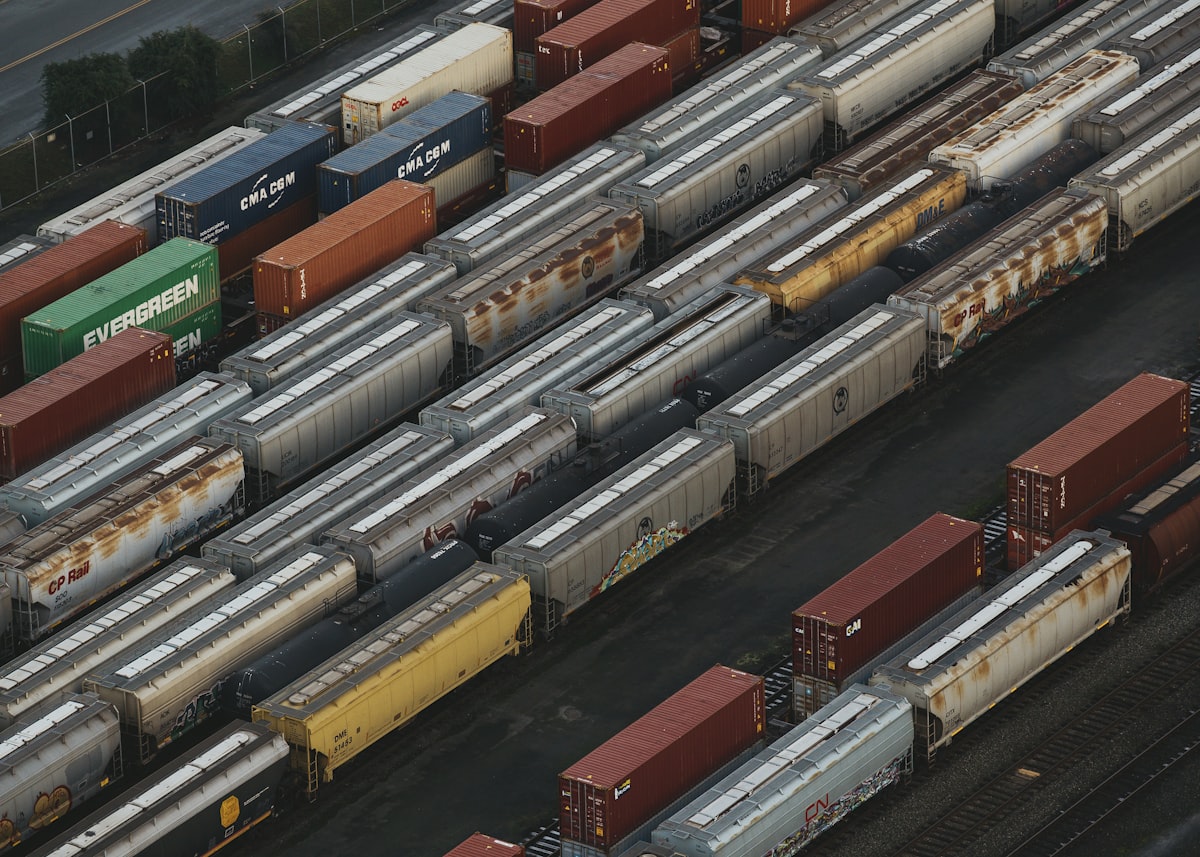
Group EV Imports: How to Save on Shipping by Buying With Others
Splitting a container with two or three other buyers can cut your China-to-Lagos shipping cost to as low as $776 per vehicle. How group EV imports work, the real risks, and how to protect yourself.
Four Cars, One Container, One Very Long WhatsApp Thread
Four colleagues in Lagos all wanted a BYD Seagull. None of them could justify the N24 million landed price alone. But together, splitting a single 40-foot container from Guangzhou to Apapa Port, the maths started to make sense. That is the simple idea behind group EV importing. The execution is where things get complicated.
What This Guide Is For
This guide is for Nigerian buyers who are serious about importing an EV and want to reduce shipping costs by sharing a container. It assumes you have already identified the car you want. It does not cover finding a supplier or negotiating purchase price. Those are separate steps.
Read this and you will understand how a shared container works mechanically, what each vehicle still requires under Nigerian law, how much you realistically save, and what mistakes can turn a cost-saving plan into a N200,000-per-day disaster at Apapa Port.
How a Shared Container Actually Works
The Container Basics
A standard 40-foot shipping container holds 3 to 4 compact sedans or 2 to 3 SUVs, depending on vehicle dimensions. When buyers split the total container cost, each participant pays only for the space their car occupies.
A full 40-foot FCL (Full Container Load) container from China to Nigeria costs approximately $3,105 to $4,250 as of March 2026. Split across four compact cars, your per-vehicle ocean freight drops to $776 to $1,063. For three cars, each buyer pays $1,035 to $1,417. Compare that to the $1,200 to $2,500 you would pay booking individual container space on your own. The saving is real and the maths is simple.
Two Types of Shared Shipping
There are two distinct ways to share shipping costs, and they work very differently.
Option 1: Informal Group FCL. One person (the organizer) books a full container under their name and recruits other buyers to fill remaining space. Each buyer pays the organizer their share. The organizer is the principal importer on the container. This is the arrangement most Nigerian EV groups organize informally, typically over WhatsApp.
Option 2: Professional LCL Groupage. A licensed freight forwarder consolidates multiple unrelated small shipments into one container as a commercial service. You pay by the cubic metre, not per vehicle. For a compact car occupying roughly 7 to 8 CBM, groupage ocean freight runs $1,400 to $3,520 at current LCL rates of $200 to $440 per CBM. That is higher than FCL sharing for most sedans, and the forwarder controls the container.
For most buyers reading this, the informal group FCL is the arrangement that makes financial sense. But it carries risks that professional LCL does not.
Step-by-Step: How a Group Import Works in Practice
Step 1: Form the Group and Lock In Commitment
You need buyers who are not just interested but ready. They have the car selected, the funds available, and a timeline that matches yours. Four people who are "thinking about it" is worth nothing. You need written commitments, and the group needs a lead organizer who takes legal responsibility for booking the container.
All buyers should agree on the container type, the origin port in China, the destination port (Apapa or Tin Can Island in Lagos), and the cost-sharing formula before anyone pays anything.
Step 2: Each Buyer Files Their Own Form M
This is where many first-timers are surprised. Sharing a container does not mean sharing paperwork. Each vehicle in a group import still requires its own Form M, filed with an Authorized Dealer Bank in Nigeria before the shipment leaves China. Form M is how the Central Bank of Nigeria tracks and approves foreign exchange for each vehicle transaction individually.
If four buyers are in one container, there are four Form Ms. The bank will not process payment for a vehicle without it, and customs will not clear a vehicle at port without evidence that the corresponding Form M exists.
Step 3: Secure a SONCAP Certificate for Each Vehicle
Every vehicle imported into Nigeria requires a SONCAP Product Certificate and a SONCAP Shipment Certificate from the Standards Organisation of Nigeria. These are obtained before the car ships. A vehicle without valid SONCAP certification will not be released at Apapa or Tin Can Island, full stop. There are no group discounts here. Each car in the container needs its own.
Step 4: Book the Container and Confirm Age Eligibility
The organizer books the 40-foot FCL with the freight forwarder. Before the container is loaded, every vehicle in the group must be confirmed as compliant with Nigeria Customs' 12-year vehicle age limit. As of 2026, only vehicles manufactured in 2013 or later can be legally imported. This applies to EVs too. A 2012 Nissan Leaf is not importable regardless of how well the shipping split works out.
Step 5: Arrange Marine Insurance Separately
Marine insurance is priced at 0.5% to 1.5% of vehicle value. Each buyer should arrange their own policy covering their specific car, not the container as a whole. If the container suffers damage and insurance covers only the organizer's vehicle, the other buyers have no recourse. Get this confirmed in writing before the ship leaves China.
Step 6: Obtain a Separate Bill of Lading for Each Vehicle
In a legitimate group container arrangement, each buyer should have their own Bill of Lading naming them as consignee for their specific vehicle. A single Bill of Lading covering all cars under the organizer's name means customs must release all cars together. One person's problem becomes everyone's problem. Request individual Bills of Lading from the freight forwarder before the container is sealed.
Step 7: Clear Each Vehicle Individually at Port
Each car in the container is assessed and cleared separately by the Nigeria Customs Service. Each buyer needs a licensed clearing agent. Clearing agent fees run $500 to $1,200 per vehicle, and port handling fees add $150 to $300 on top. The customs duty on EVs is 10% to 20% (versus 35% for regular cars), plus a 15% National Automotive Council (NAC) levy and a 0.5% ECOWAS Trade Levy. EVs are exempt from the 7.5% VAT and Import Adjustment Tax. The combined effective duty rate for EVs is roughly 25% to 35%, which is significantly better than the 70% to 100% applied to conventional vehicles.
You also need a PAAR (Pre-Arrival Assessment Report) for each vehicle. This is generated by Nigeria Customs Service before the ship arrives, based on the Bill of Lading details. Your clearing agent handles this.
Timeline: What to Expect Week by Week
| Phase | Activity | Estimated Duration |
|---|---|---|
| Pre-shipment | Form M filing, SONCAP certificates, vehicle purchase confirmation, container booking | 2 to 4 weeks |
| Ocean transit (FCL) | Container in transit from China to Lagos | 35 to 38 days |
| Port arrival and customs | PAAR, customs assessment, duty payment, vehicle release | 18 to 21 days (current average) |
| Total expected timeline | From first payment to car in your hands | 10 to 14 weeks |
Note: Red Sea and Suez Canal disruptions in early 2026 are pushing some China-to-Nigeria shipments via the Cape of Good Hope, which adds transit time and route surcharges. Factor this into your planning if your freight forwarder mentions this routing.
Full Cost Breakdown: What Group Sharing Actually Saves You
| Cost Item | Solo Import | Group of 3 (per vehicle) | Group of 4 (per vehicle) |
|---|---|---|---|
| Ocean freight, China to Lagos (FCL) | $1,200 to $2,500 | $1,035 to $1,417 | $776 to $1,063 |
| Clearing agent fees | $500 to $1,200 | $500 to $1,200 | $500 to $1,200 |
| Port handling fees | $150 to $300 | $150 to $300 | $150 to $300 |
| Marine insurance (on $25,000 car) | $125 to $375 | $125 to $375 | $125 to $375 |
| Escrow fee (1.25% to 3.25% of freight share, if used) | N/A | ~$13 to $46 | ~$10 to $35 |
| Customs duty on $25,000 EV (25% to 35%) | $6,250 to $8,750 | $6,250 to $8,750 | $6,250 to $8,750 |
| Estimated total landed (all-in, per vehicle) | $38,000 to $42,000 | $36,500 to $40,500 | $35,900 to $40,100 |
The saving on a group of four versus solo is roughly $1,400 to $2,600 per vehicle on shipping alone. To put that in fuel terms: EV owners report paying the equivalent of about $3 per 200 km in charging costs, versus $15 or more for the same distance in a petrol car. Your group shipping saving covers months of that difference before you even turn the key.
Pitfalls to Avoid
- Paying an unknown organizer without escrow. Advance-fee fraud is a documented risk in any arrangement where you send money to a private individual before the car ships. If you cannot meet the organizer in person or verify their track record with previous imports, use a Nigerian escrow service. Standard escrow fees run 1.25% to 3.25% of the transaction value. That cost is cheap insurance against losing your entire shipping contribution to someone who vanishes after collection. As WC Shipping advises: if you're not sure of the organizer, request escrow.
- Skipping individual Bills of Lading. If all vehicles are on a single Bill of Lading under the organizer's name, customs treats the entire container as one shipment. One buyer's clearance problem holds every other vehicle. Insist on separate Bills of Lading before the container leaves China. This is not optional.
- Underestimating demurrage risk. Demurrage at Nigerian ports costs approximately $200 per day. E no be small thing. If one buyer defaults on their customs duties, faces documentation problems, or simply disappears, the entire container can be held. At $200 per day, two weeks of delay wipes out every naira the group hoped to save on shipping, and then some.
- Trusting a verbal agreement on cost splits. Put the cost-sharing formula in writing before anyone transfers money. What happens if the container's freight costs more than quoted? Who pays the surplus? Who handles the clearing agent for each car? Who has authority to release the container? Answer these questions in a written agreement signed by all parties before the booking is made.
- Forgetting that each car needs its own Form M before shipment. Form M must be filed with an Authorized Dealer Bank before the car leaves China. It cannot be done retroactively. If one buyer in the group has not filed their Form M before the container ships, their car cannot be legally paid for through the banking system and clearance will stall.
- Importing cars older than 12 years. Nigeria Customs enforces a strict 12-year age limit. In 2026, vehicles manufactured before 2013 are barred from entry. A used EV that looks affordable may be ineligible. Verify the manufacture year on the VIN before committing to purchase.
- Assuming EVs are zero-rated at customs without confirming the process. The VAT exemption for EVs exists under the VAT Modification Order 2024, but the practical claiming procedure at the port level remains undefined. Budget for the possibility that your clearing agent cannot apply the exemption smoothly. The duty reduction from 35% to 10% to 20% is the more reliable saving.
- Ignoring the VIN valuation problem. Nigeria Customs uses a VIN-based valuation database introduced in February 2022. Importers and industry stakeholders have accused this system of inflating assessed vehicle values by up to 300% against actual depreciated used-car values. This affects every car in your container. Your clearing agent should have experience contesting overvaluations before you agree to pay assessed duties.
- Looking for a specific legitimate group without verifying it independently. No publicly verified, organized EV group buying platform currently operates in Nigeria that this guide can point you to. Be cautious of any social media post or WhatsApp group that asks for a deposit before you can verify the organizer's past imports. The concept works. The scam version of it also works, for the fraudster.
When Group Importing Makes Sense and When It Does Not
A group container is worth pursuing if all four conditions apply: your group has three or four buyers with matching timelines, everyone's paperwork (Form M, SONCAP) is underway simultaneously, there is a trustworthy organizer with documented import experience, and the cost split is governed by a written agreement with escrow holding everyone's freight contribution.
It becomes a bad bet if only two buyers are ready, the organizer is unknown to you, the group is loosely organized over social media, or timelines are mismatched by months. In that scenario, paying the solo rate of $1,200 to $2,500 for individual container space may cost you $1,000 to $2,000 more in shipping. That extra cost buys you zero wasted time, no blocked port containers, and no fraud risk. For a lot of buyers in Abuja and Lagos Island, the simplicity is worth the price difference.
What These Cost on ChargeWay
You do not have to navigate the import process alone. ChargeWay sources quality tested used EVs direct from China at wholesale pricing. Every vehicle is properly inspected before it ships. Here is what you could pay right now:
| Model | FOB Price | Est. Landed Price | Range |
|---|---|---|---|
| BYD Seagull | $10,000 | ~N18,500,000 | 305 km |
| Neta V | $12,000 | ~N22,000,000 | 380 km |
| BYD Dolphin | $16,000 | ~N28,000,000 | 427 km |
| MG MG4 Electric | $20,000 | ~N34,000,000 | 450 km |
These are estimated wholesale prices for quality tested vehicles, shipped direct from China. No middleman markup, no dealer premium. Final prices depend on current exchange rates at time of order. Visit chargeway.africa/cars for live pricing and available stock.
Related Articles
Apapa vs Tin Can Island: Which Port Should You Use to Import Your EV?
Lagos has two major ports clearing cars. For a tokunbo Camry, the choice barely matters. For an EV, it affects your timeline and your budget. Know this before a single dollar moves.
8 min read
Import GuideHow to Avoid Getting Scammed When Importing an EV to Nigeria
From fake Facebook listings to port container disappearances, EV import fraud in Nigeria is sophisticated and expensive. Here is exactly what to check before you send a single naira.
8 min read
Import GuideHow to Choose a Clearing Agent for Your EV Import in Nigeria
Your EV is sitting at Apapa. The wrong clearing agent will cost you N300,000 in demurrage, hand you forged duty receipts, or disappear entirely. Here is how to pick the right one.
8 min read