Can You Import an EV to Nigeria Without a Clearing Agent?
Technically legal, practically brutal. The honest answer to the question every DIY importer asks before their car gets stuck at Apapa.
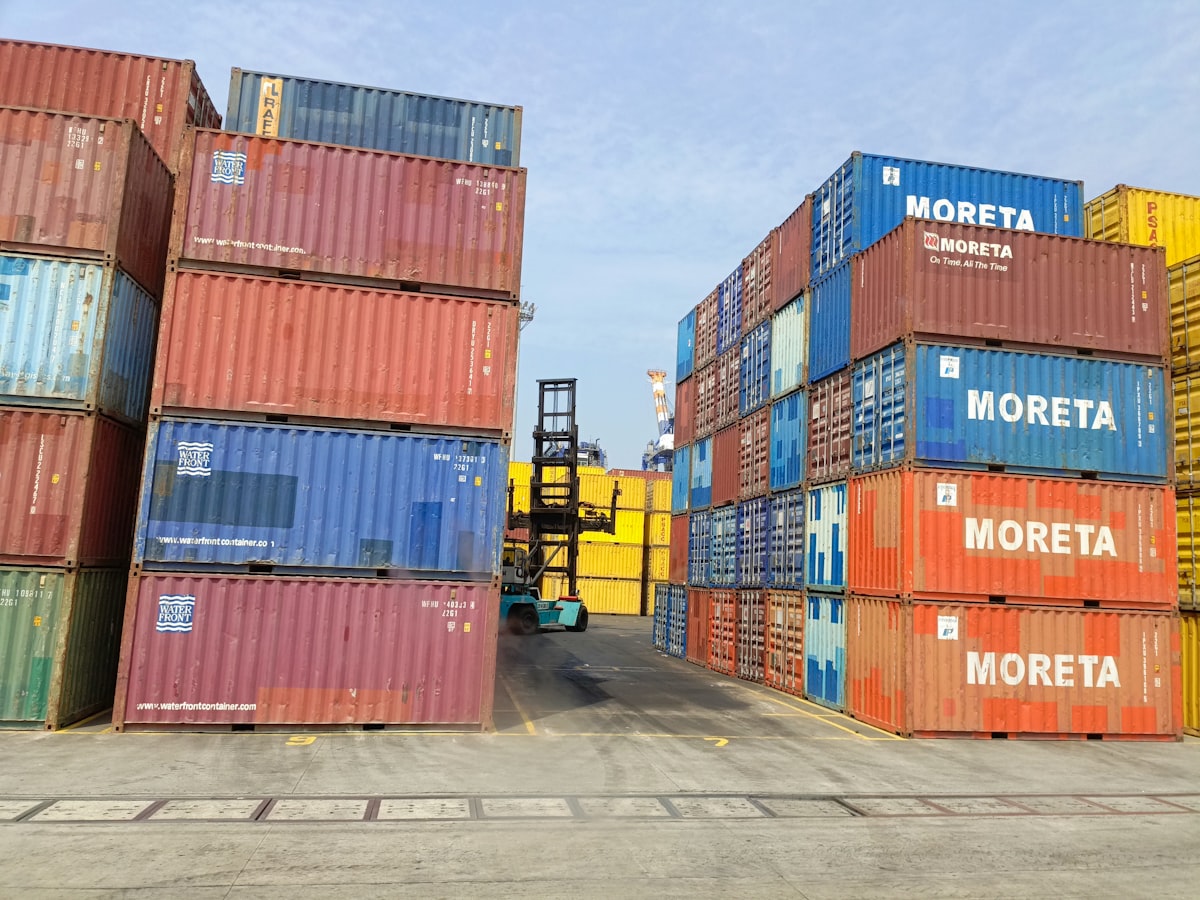
His name does not matter, but he is the kind of person you respect immediately. Engineer. Works in Victoria Island. Spent three months researching his EV import from China, built a spreadsheet with every duty line, printed every document twice. He decided to save the agent fee and clear the car himself. Six weeks after the vessel docked at Tin Can Island, his car was still sitting in the yard, collecting NGN 3,000 to NGN 5,000 in demurrage every single day. By the time the dust settled, the demurrage alone had cost him more than twice what a competent clearing agent would have charged. The spreadsheet did not have a row for that.
Who This Guide Is For
If you are importing a used EV to Nigeria and wondering whether you can skip the clearing agent, this is for you. It is also for anyone who has been quoted an agent fee between NGN 250,000 and NGN 500,000 and is trying to decide whether it is worth it.
We will walk through what is actually involved, what the law says, what the ports require, and what you are really risking. Short answer: hire a specialist. But you deserve to know exactly why, with the numbers behind it.
What the Law Actually Says
Self-clearing is technically legal. The Nigeria Customs Service Act 2023 provides a Direct Trader Input (DTI) pathway, where an individual importer submits the Single Goods Declaration (SGD) directly through the government's NICIS II system, or its successor, the B'Odogwu Unified Customs Management System launched on April 7, 2025. The law does not require you to use a licensed agent.
The problem is everything that comes after you submit that declaration. Only licensed clearing agents hold Customs access cards that grant physical entry to the port's vehicle yards. Without one of those cards, you cannot walk into Apapa or Tin Can Island to complete the physical inspection and release. You would still need to engage an agent for port access, which means you are paying for most of the service anyway.
Step-by-Step: What Clearing an EV Actually Involves
This is the full picture. Every step is real. None of it is optional.
Step 1: Pre-Shipment Documentation (3 to 8 weeks)
Before your car leaves the factory in China, you need to complete at least five distinct bureaucratic steps. Register for a Tax Identification Number (TIN) with the Joint Tax Board. Open a Form M on the Nigeria Single Window Trade Portal. Submit that Form M to an Authorized Dealer Bank (ADB) with a pro-forma invoice, local marine insurance certificate, and product certificate. Obtain SONCAP certification from the Standards Organisation of Nigeria. Then apply for your Pre-Arrival Assessment Report (PAAR).
Even experienced professionals take 3 to 8 weeks to complete this phase. The Form M alone requires a CAC-registered business, an active TIN, and a linked ADB account. If you have not already set all that up, add several more weeks to your timeline.
Step 2: SONCAP and Certificate of Conformity
Every regulated import into Nigeria, including EVs, requires a SONCAP Product Certificate and a SONCAP Shipment Certificate from the Standards Organisation of Nigeria. For EVs imported from China, the Certificate of Conformity costs approximately USD 800. This is not optional. Ships without it cannot be cleared.
Step 3: Shipping
RoRo (Roll-on Roll-off) is the most common and cost-effective method. Your car is driven onto the vessel in China and driven off at Lagos. RoRo shipping from China to Lagos runs USD 800 to USD 1,500 per vehicle. Container shipping costs more at USD 1,200 to USD 2,500, with no meaningful benefit for a single vehicle.
Once the vessel departs, the clock starts. You have 3 to 5 days of free storage after arrival before demurrage begins.
Step 4: PAAR Generation (6 hours after ADB submission)
The Pre-Arrival Assessment Report is generated by the Nigeria Customs Service within 6 hours of your Authorized Dealer Bank transmitting the final shipping documents. It tells you exactly what duties and taxes you owe before your car is released. If the PAAR is rejected, clearance stops. Port storage fees keep running regardless.
Step 5: Customs Declaration via NICIS II and B'Odogwu
You or your agent submits the Single Goods Declaration through the government's customs platform. As of April 2025, this is the B'Odogwu system, which replaced large portions of NICIS II. Most online guides still reference the older system. If you are working from anything written before April 2025, the interface and procedures may not match what the ports are currently using.
Step 6: Duty Payment at a Commercial Bank
Duties are paid at a commercial bank using a customs duty reference number. For EVs, the effective import duty rate is approximately 10 to 20 percent of the NCS-assessed CIF value. EVs are currently exempt from the 7.5 percent VAT, the NAC Levy (which runs 15 to 35 percent on combustion vehicles), and the ECOWAS Trade Levy. That is a meaningful advantage. A petrol car can face combined duties and levies of up to 70 percent of CIF value.
One critical detail: the NCS customs duty exchange rate is set separately from the CBN official rate and the parallel market rate. As of March 2026, it was NGN 1,481.482 per USD, and it changed five times within a single month. Your duty bill can shift significantly between the day you buy the car and the day you clear it.
Step 7: Physical Inspection and Vehicle Release
After payment, a customs officer physically inspects the vehicle, verifies the VIN, and confirms it matches your documentation. An Exit Note and Release Order are issued. Only then can your vehicle leave the port. This step requires physical presence inside the port's vehicle yard. Without a licensed agent's access card, you cannot complete it yourself.
Step 8: Transport from Port
You arrange transport from Apapa or Tin Can Island to the vehicle's final destination. Vehicle registration in Lagos or the FCT adds another NGN 50,000 to NGN 100,000.
Timeline: Realistic Weeks for Each Phase
| Phase | With Experienced Agent | Self-Clearing (First Time) |
|---|---|---|
| TIN, Form M, SONCAP, PAAR (pre-shipment) | 3 to 8 weeks | 6 to 14 weeks |
| Shipping (China to Lagos, RoRo) | 3 to 5 weeks | 3 to 5 weeks (same) |
| Port clearance after vessel arrival | 5 to 7 working days | 3 to 6 weeks |
| Total end-to-end (minimum) | 6 to 10 weeks | 12 to 25 weeks |
The NCS Act 2023 introduced a 48-hour clearance target. Industry consensus is that this has not been consistently achieved. Five to seven working days with a competent agent is the realistic expectation. For a self-clearer with documentation errors, three to six weeks at the port is a well-documented outcome.
The Full Cost Picture
| Cost Item | Amount |
|---|---|
| Import duty (EV, percentage of NCS CIF value) | 10 to 20% |
| VAT on EV | 0% (exempt since 2024) |
| ECOWAS Trade Levy | 0% for EVs (exempt); 0.5% of CIF for combustion vehicles |
| CISS levy | 1% of CIF value |
| Marine insurance | 0.5% to 1.5% of declared vehicle value |
| RoRo shipping (China to Lagos) | USD 800 to USD 1,500 |
| SONCAP Certificate of Conformity (Chinese EVs) | Approximately USD 800 |
| Terminal Handling Charges at Lagos ports | NGN 150,000 to NGN 250,000 |
| Shipping line release fee | NGN 80,000 to NGN 150,000 |
| Port documentation and bank transaction fees | NGN 20,000 to NGN 50,000 |
| Port storage (demurrage) after free period | NGN 3,000 to NGN 5,000 per day; escalates steeply after 7 days |
| Vehicle registration (Lagos or FCT) | NGN 50,000 to NGN 100,000 |
| Clearing agent fee (sedan) | NGN 80,000 to NGN 300,000 |
| Clearing agent fee (SUV or luxury EV) | NGN 250,000 to NGN 500,000 |
| Clearing agent fee (USD-priced EV import from China) | USD 500 to USD 1,200 |
To put the agent fee in context: on a vehicle with a CIF value of NGN 14 million, total clearing costs including duties, terminal handling, and agent fees have been documented at approximately NGN 24.75 million. That is a 76 percent increase over the CIF value. The agent's professional fee is a small slice of that total.
Pitfalls to Avoid
- Wrong HS code classification. Battery electric vehicles fall under HS Code 8703.80. Customs officers at Nigerian ports frequently misclassify EVs under general vehicle categories such as 8703.22 or 8703.23, triggering significantly higher duty assessments. Even trained officers get this wrong. A self-clearer with no prior experience is especially exposed.
- VIN valuation disputes. The NCS VIN Valuation system uses AI to assign a customs value based on your vehicle's VIN, not your declared purchase price. Some importers have reported duty inflation of up to 300 percent on certain vehicles. Experienced agents know how to document and argue valuation disputes. A first-time self-clearer typically does not.
- Assuming the VAT exemption is automatic. EVs were exempted from the 7.5 percent VAT by the VAT Modification Order 2024. As of early 2026, no gazetted implementation guidelines exist for how to claim this exemption in practice. If you do not have an agent who knows the current informal procedure at the port, you may be charged the full VAT by default. On a USD 25,000 vehicle, that is approximately USD 1,875 in unnecessary tax.
- Ignoring demurrage until it is too late. After the 3 to 5 day free storage period, demurrage runs at NGN 3,000 to NGN 5,000 per day, escalating steeply after 7 days. On long-delayed clearances, demurrage has exceeded the original purchase value of the vehicle. Every documentation error adds days.
- Post-clearance audit liability. The NCS Act 2023 introduced post-clearance audit powers. Customs can reassess duties and impose additional liabilities even after your vehicle has been released. Errors in a self-submitted declaration can create retroactive financial exposure long after you think the process is done.
- Using outdated guides. The B'Odogwu system replaced large portions of NICIS II as of April 7, 2025. Any guide written before that date may reference outdated interfaces, form numbers, or procedures.
- Importing a vehicle manufactured before 2015. Only vehicles manufactured in 2015 or later can be legally imported into Nigeria. This applies to EVs equally. An older vehicle will be denied clearance regardless of condition, and money already spent on shipping and SONCAP is not refundable.
- Looking for an oga at the port. Some buyers try to find an informal contact inside the port who can move things along quickly. This is not a substitute for a licensed agent and typically exposes you to both financial and legal risk.
What You Actually Save by Going It Alone
The maximum saving from skipping a clearing agent is the agent's professional fee: NGN 80,000 to NGN 300,000 for sedans, NGN 250,000 to NGN 500,000 for SUVs and luxury EVs, or USD 500 to USD 1,200 for EV imports priced in USD from China. That is it. Every government charge, every port fee, every shipping cost is identical whether you use an agent or not.
A self-clearer who makes one significant error, whether that is a wrong HS code, a missed document, or a PAAR rejection, can easily accumulate delays measured in weeks. At NGN 3,000 to NGN 5,000 per day, escalating after seven days, the demurrage from a single four-week delay runs to NGN 84,000 to NGN 140,000 at minimum, often far more once the escalation kicks in. That already erases the savings from skipping the agent. Fail to claim the VAT exemption on a USD 25,000 vehicle, and you are out another USD 1,875.
The DIY path also requires 80 to 120 or more hours of your own time across 8 to 14 weeks. Before accounting for any of the risks above.
What These Cost on ChargeWay
You do not have to navigate the import process alone. ChargeWay sources quality tested used EVs direct from China at wholesale pricing. Every vehicle is properly inspected before it ships. Here is what you could pay right now:
| Model | FOB Price | Est. Landed Price | Range |
|---|---|---|---|
| BYD Seagull | $10,000 | ~N18,500,000 | 305 km |
| Neta V | $12,000 | ~N22,000,000 | 380 km |
| BYD Dolphin | $16,000 | ~N28,000,000 | 427 km |
| MG MG4 Electric | $20,000 | ~N34,000,000 | 450 km |
These are estimated wholesale prices for quality tested vehicles, shipped direct from China. No middleman markup, no dealer premium. Final prices depend on current exchange rates at time of order. Visit chargeway.africa/cars for live pricing and available stock.
Related Articles
Apapa vs Tin Can Island: Which Port Should You Use to Import Your EV?
Lagos has two major ports clearing cars. For a tokunbo Camry, the choice barely matters. For an EV, it affects your timeline and your budget. Know this before a single dollar moves.
8 min read
Import GuideHow to Avoid Getting Scammed When Importing an EV to Nigeria
From fake Facebook listings to port container disappearances, EV import fraud in Nigeria is sophisticated and expensive. Here is exactly what to check before you send a single naira.
8 min read
Import GuideHow to Choose a Clearing Agent for Your EV Import in Nigeria
Your EV is sitting at Apapa. The wrong clearing agent will cost you N300,000 in demurrage, hand you forged duty receipts, or disappear entirely. Here is how to pick the right one.
8 min read