Chinese EVs vs Korean EVs: Which Is Right for Nigeria in 2025?
BYD or Hyundai? Kia or a grey-market Chinese import? Both camps now have official dealerships in Nigeria, and the choice is not as obvious as the price tags suggest.
The Showroom Moment Nobody Expected
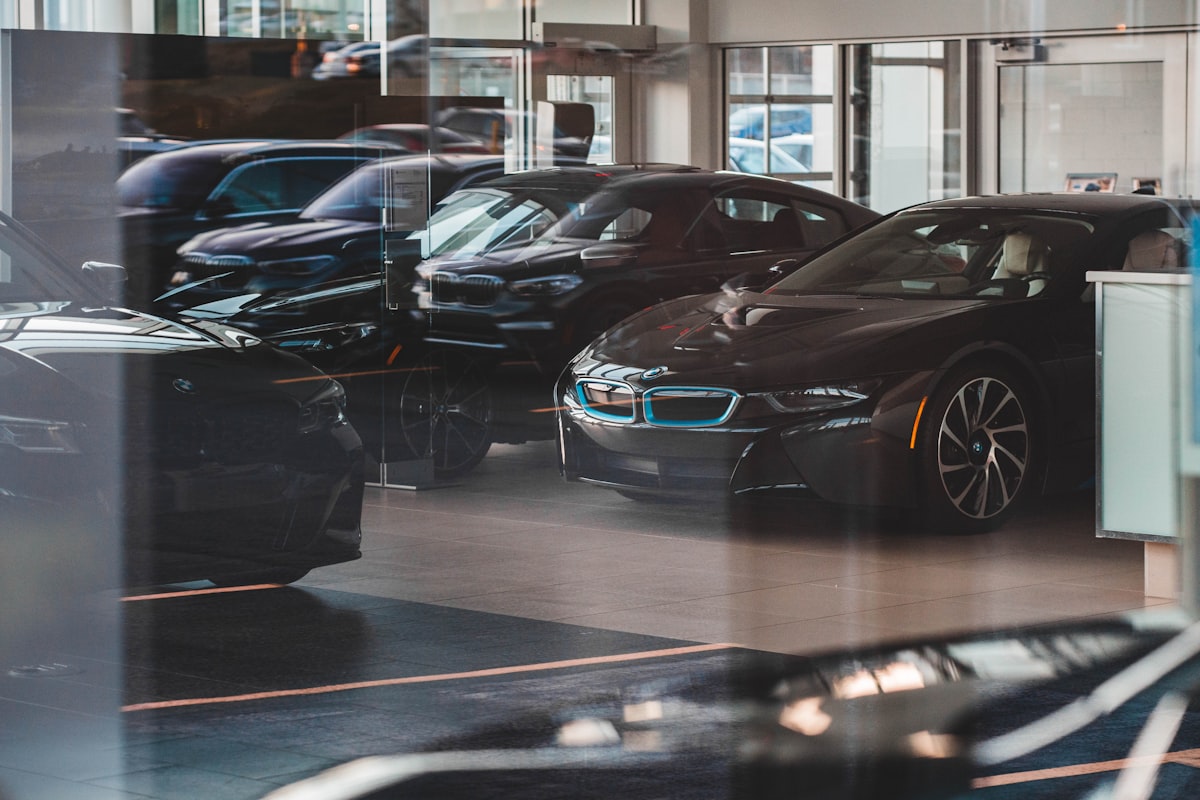
Walk into a LOXEA Nigeria showroom in Ikeja or Victoria Island today, and you will find a BYD Dolphin sitting next to a BYD Atto 3. Drive to Isolo, and Kia Motors Nigeria at 118 Apapa-Oshodi Expressway will show you an EV6. Both camps now have official boots on the ground in Lagos, Abuja, and Port Harcourt. For the first time, the Chinese vs Korean EV argument in Nigeria is not theoretical.
The question is no longer which brand you can actually buy here. It is which one you should buy here.
The Quick Verdict
For most Nigerian buyers in 2025, Chinese EVs, particularly the BYD Dolphin and BYD Atto 3 through LOXEA Nigeria, offer significantly better value. The price gap is N7 million to N10 million versus the closest Korean competitor, the charging infrastructure gap between the two is irrelevant in Nigeria's current reality, and the official LOXEA service package covers the biggest anxieties around parts and support. Korean EVs make sense if you want the best long-range, premium-feeling car and are willing to pay for it, or if you already trust the Hyundai or Kia service network from your petrol car experience.
Side-by-Side: The Numbers That Matter
| Spec | BYD Dolphin | BYD Atto 3 | Hyundai Kona Electric | Kia EV6 Light | Hyundai IONIQ 5 SE |
|---|---|---|---|---|---|
| Price in Nigeria (estimate) | pricing not yet confirmed by LOXEA | approximately N42 to N55 million | N18M to N28M | N32.5M to N33.5M | N32M to N42M |
| Battery type | LFP Blade Battery | LFP Blade Battery (60.5 kWh) | Lithium-ion | Lithium-ion NCM | Lithium-ion pouch (up to 84 kWh) |
| Battery warranty | 8 years / 500,000 km | 8 years / 500,000 km | 10 years (approx. 70% capacity) | 10 years (approx. 70% capacity) | 10 years (approx. 70% capacity) |
| DC fast charge speed | Not publicly listed | Up to 89 kW (10-80% in approx. 38 min) | Not listed | Up to 240 kW (architecture) | Up to 240 kW (10-80% in approx. 18 min) |
| Local assembly in Nigeria | No | No | Yes (Stallion Group, VON plant) | No | No |
| Official Nigerian dealership | Yes (LOXEA Nigeria) | Yes (LOXEA Nigeria) | Yes (Stallion Africar) | Yes (Kia Motors Nigeria) | Yes (Stallion Africar) |
| Financing available | Yes (Stanbic IBTC) | Yes (Stanbic IBTC) | Contact Stallion | Contact Kia Nigeria | Contact Stallion |
Price: The Clearest Gap
If you are comparing like for like, the BYD Dolphin starts at around N22 million through LOXEA Nigeria. The Kia EV6 starts at around N32.5 million. That is roughly N10 million sitting between them. In Nigerian terms, that is a generator, three years of home charging costs, and your first major service rolled into one sum.
The Hyundai Kona Electric, locally assembled by Stallion Group at the VON plant, closes some of that gap. It runs from N18 million to N28 million depending on trim and the exchange rate at the time of purchase. That makes it the most affordable Korean option and, at the lower end, price-competitive with the BYD Dolphin. Local assembly reduces import costs that fully imported Korean EVs like the IONIQ 5 and EV6 cannot escape.
At the top, the Hyundai IONIQ 5 SE ranges from N32 million to N42 million. These are aspirational numbers for most buyers. Confirm exact pricing directly with Stallion Africar before budgeting, since exchange rate sensitivity on fully imported units is significant.
One honest note on BYD Atto 3 pricing: sources vary widely, from N28 million to N45 million, depending on trim and whether the figure comes from LOXEA directly or grey-import listings. The approximately N42 to N55 million range in this article reflects official-channel estimates. Get a written quote from LOXEA before committing.
Service and Parts: The Real Decider in Nigeria
Range anxiety is a Western problem. In Nigeria, your real anxiety is: what happens when something breaks?
Both camps now have official answers to that question.
Chinese EVs: What LOXEA Brings
BYD's official launch in Nigeria on March 28, 2025 through LOXEA Nigeria, a division of CFAO Mobility, is not just a sales event. The LOXEA package includes charging station installation, vehicle maintenance, repair services, and spare parts provision. Showrooms operate in Lagos (Ikeja and Victoria Island), Abuja (Wuse II), and Port Harcourt (GRA), with Enugu and Onitsha listed as coming soon. For buyers outside those cities, this is the honest limitation: your service network is currently concentrated in three major centres.
Korean EVs: The Existing Network Advantage
Hyundai and Kia have a genuine edge here, one built over years of selling petrol cars. Kia Motors Nigeria runs service centres at 118 Apapa-Oshodi Expressway in Isolo, 308 Adeola Odeku Street in Victoria Island, Plot 704 Ahmadu Bello Way in Garki 2 Abuja, plus Port Harcourt and Kano. Stallion Africar handles Hyundai service across Nigeria, including a centre at Plot 6, opposite Arab Contractors, Port Harcourt Expressway in Enugu.
This network knows what it is doing. Many of the technicians have handled Hyundai and Kia combustion vehicles for years. The physical infrastructure, the locations, the familiarity of walking through a door you have walked through before, is real.
Battery and Reliability: An Honest Look
BYD's Blade Battery: Built for Heat
BYD's Blade Battery uses lithium iron phosphate chemistry. LFP cells produce minimal heat during operation, and the long prismatic cell shape enhances heat dissipation between cells. BYD describes the battery as stable whether in desert heat, tropical humidity, or northern winter conditions. For Lagos traffic in April, this is a genuinely relevant claim, not marketing language.
The honest caveat: real-world testing of the BYD Atto 3 found the battery can heat up to 45 degrees Celsius under aggressive charging conditions, which can reduce DC fast charging speed to just 48 kW at 40% state of charge. In Nigeria this largely does not matter because DC fast chargers are almost nonexistent, and you will be charging at home on AC most nights. But it is worth knowing.
Korean Batteries: Faster, With Known Faults
The Hyundai IONIQ 5 and Kia EV6 use an 800-volt electrical architecture that enables up to 240 kW DC fast charging, taking the IONIQ 5 from 10% to 80% in approximately 18 minutes. Impressive on paper. The catch: Nigeria has approximately 12 public EV charging sites nationwide, most in Lagos and Abuja. The 27,000 fuel stations you have always relied on have no EV equivalent yet. Ultra-fast charging is a benefit you cannot use.
There is a more pressing reliability concern. Hyundai and Kia recalled over 200,000 EVs, including the IONIQ 5, EV6, Genesis GV60, and Kia EV9, for a defective Integrated Charging Control Unit (ICCU) that can prevent charging the 12-volt battery and cause complete loss of drive power. Consumer Reports found that between 2% and 10% of affected model owners experienced the fault. A further ICCU recall was issued in September 2025, covering the 2022-2024 IONIQ 5, 2023-2025 IONIQ 6, 2023-2024 Genesis GV60, Electrified GV70, and Electrified G80, because the earlier fix did not fully resolve the problem.
Consumer Reports has given the IONIQ 5, EV6, GV60, and EV9 below-average predicted reliability scores as a result. This does not make Korean EVs a bad choice. Every car has faults. But if yours develops an ICCU fault in Nigeria, you need a dealership that can fix it fast. That brings us back to the service network question above.
Warranty
Hyundai Motor Group leads here. The 10-year battery warranty at approximately 70% capacity on their E-GMP platform vehicles is the best in the industry. BYD offers 8 years and 500,000 km. For a Naira-denominated buyer thinking about total cost of ownership over a decade, the Korean warranty is a real differentiator.
Charging in Nigeria: What You Actually Get
All major EV brands use the Type 2 AC standard for home charging in Nigeria. A BYD Dolphin and a Kia EV6 plug into the same home charging setup. The practical difference in your daily routine is minimal: charge overnight, drive the next day.
With petrol at approximately N1,332 per litre in Lagos as of April 2026, the savings are real regardless of which EV you choose. A ride-hailing driver spending N18,000 to N20,000 on petrol per day switches to under N4,000 in electricity costs for an equivalent electric trip. Nigerian commercial fleet operators using EVs report up to 40% operational cost savings. This maths works for both Chinese and Korean EVs equally.
Who Should Buy Which
Buy a BYD Dolphin or Atto 3 if you:
- Want the lowest entry price to official EV ownership in Nigeria, starting around N22 million
- Do daily commutes in Lagos, Abuja, or Port Harcourt where LOXEA service is accessible
- Want an LFP battery that handles Nigerian heat well without worrying about degradation in hot-weather slow-charging scenarios
- Are a ride-hailing driver or small fleet operator focused on running cost savings above all else
- Want the V2L feature: the Atto 3 can power external appliances, functioning as a mobile generator during a NEPA outage
Buy a Hyundai Kona Electric if you:
- Want the most affordable Korean option with local assembly benefits and Stallion's established service network
- Want the 482 km range in a car that Stallion supports nationwide, including in Enugu and beyond the major cities
- Already have a relationship with a Stallion service centre from a petrol Hyundai
Buy a Kia EV6 or Hyundai IONIQ 5 if you:
- Have a budget above N32 million and want a premium, fast-charging-ready car that will still be excellent in five years when Nigeria's charging infrastructure grows
- Value the 10-year battery warranty and the presence of a car that genuinely turns heads on the Third Mainland Bridge
- Are buying for corporate use where the brand perception of a Korean premium EV matters in client-facing settings
- Can live with the ICCU recall history and trust that Kia or Hyundai Nigeria's service centres will handle any fault that arises
The Import and Tax Picture
Both Chinese and Korean EVs benefit from Nigeria's current EV import incentives. EVs are exempt from VAT at 7.5% and the Import Adjustment Tax. Import duty of 10% to 20% and a 15% National Automotive Council levy still apply, but the combined tariff burden is far lower than the approximately 70% that traditional combustion vehicles face.
The locally assembled Hyundai Kona Electric gets additional cost relief from being built at the Stallion-run VON plant rather than imported fully built. The Nigerian government's Electric Vehicle Transition and Green Mobility Bill (2025) has passed a second reading in the Senate and would add tax holidays, import duty waivers, and toll exemptions for EV users. It is not yet law, so factor it in as a potential upside rather than a certainty.
What These Cost on ChargeWay
You do not have to navigate the import process alone. ChargeWay sources quality tested used EVs direct from China at wholesale pricing. Every vehicle is properly inspected before it ships. Here is what you could pay right now:
| Model | FOB Price | Est. Landed Price | Range |
|---|---|---|---|
| BYD Seagull | $10,000 | ~N18,500,000 | 305 km |
| BYD Dolphin | $16,000 | ~N28,000,000 | 427 km |
| GAC Aion Y Plus | $20,000 | ~N34,000,000 | 510 km |
| BYD Atto 3 | $22,000 | ~N38,000,000 | 420 km |
These are estimated wholesale prices for quality tested vehicles, shipped direct from China. No middleman markup, no dealer premium. Final prices depend on current exchange rates at time of order. Visit chargeway.africa/cars for live pricing and available stock.
Related Articles
BYD Atto 3 vs MG ZS EV: Which Electric SUV Wins in Nigeria?
Two Chinese electric SUVs, same 5-star safety rating, similar price bracket. But only one can power your fridge during a NEPA outage. Here is the honest breakdown.
9 min read
ComparisonBYD Blade Battery vs NMC: Which Battery Is Safer in Nigeria's Heat?
Battery fires scare a lot of Nigerians away from EVs. The data tells a different story, and the chemistry inside your car matters more than most buyers realise.
9 min read
ComparisonBYD Han vs Tesla Model S: Which N100M+ EV is Worth It in Nigeria?
Two world-class sedans, N90M+ landed in Nigeria. One with celebrity cachet and no service center. One with official distribution, Nappa leather, and a rotating screen. A clear verdict on both.
8 min read